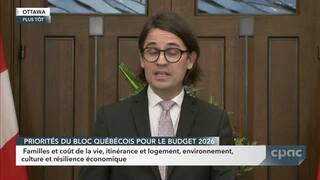
Extend the Reaching Home homelessness program beyond 2028
Bloc Québécois, Journal Le Soir, Nov 4; Jean-Denis Garon, CPAC, Nov 4
Reaching Home is renewed for 10 years from 2028-29.
Federal Budget 2026 for municipalities: the Community Stream rises only to $2.8 billion by 2030-31 and the Housing Accelerator Fund ends after 2027-28.
Build Communities Strong Fund, Community Stream
$2.5 billion in 2026-27
Rises to $2.8 billion by 2030-31 on planned 2% indexation
Homelessness plan
$11.2 billion over four years from 2027-28
Delivered through Build Canada Homes and provinces
Federal lands for housing
$1.5 billion over four years
Water, wastewater and roads on federal sites, from 2027-28
Recreational facilities and ice rinks
$1.5 billion over nine years
$680 million of it booked to 2030-31
E-permitting partnership with FCM
$100 million over three years
From 2027-28
Budget 2026 treats municipalities as delivery partners for homelessness and housing, with the money routed around you through a Crown corporation and provincial agreements. Your own transfers stay on their planned path, the Housing Accelerator Fund runs out and there is no new transit money.
The budget states no per-municipality amounts. Figures are program totals, in millions from the chapter cost tables or billions from Annex 1.
| Change | Amount | Who in this group | When |
|---|---|---|---|
| Gain: homelessness plan | $11,224 million to 2030-31, plus $17.8 billion in future years | Cities with large homeless populations, Reaching Home community entities | From 2027-28 |
| Gain: federal lands for housing | $1,550 million over four years, plus $387.4 million in future years | Municipalities with underused federal sites | From 2027-28 |
| Gain: recreational facilities and ice rinks | $680 million to 2030-31, of $1.5 billion over nine years | Owners of aging arenas and recreation centres | From 2027-28 |
| Gain: e-permitting partnership with FCM | $100 million over three years | Planning and building departments | From 2027-28 |
| Flat: Community Stream | $2.5 billion in 2026-27 to $2.8 billion in 2030-31 | Every municipality | Ongoing, indexed at 2% |
| Expires: Housing Accelerator Fund | $1.1 billion in 2026-27, $0.1 billion in 2027-28, nothing after | Cities with accelerator agreements | Last money in 2027-28 |
| Winding down: Investing in Canada Infrastructure Program | $4.2 billion in 2026-27 to $2.1 billion in 2030-31 (baseline) | Municipalities with legacy transit and green projects | To 2030-31 |
| Existing money restated | Build Communities Strong Fund project list, $261.8 million for the LaSalle Causeway, Canada Infrastructure Bank loans | Named projects in every province | Already funded |
New Build Communities Strong Fund money in Budget 2026 totals $4.2 billion over five years, mostly in 2027-28 and 2028-29 (calculated from Annex 1, Table A1.20). The timing matches the $2 billion Health Infrastructure Fund top-up over those two years, which goes to provinces for community mental health and addictions facilities. Only $3 million of the costed municipal measures arrives this fiscal year, for Tumbler Ridge, British Columbia (Annex 1, Table A1.19). Canada 160 also draws $100 million from the existing Build Communities Strong Fund for community spaces in 2027-28 (Chapter 4, s. 4.1). That money was already in the fund, so it is a new use of old money.
The budget's own division of labour explains the routing. It assigns property taxes, zoning, permitting and development cost charges to local governments, capital and land to Ottawa, and operations to provinces (Chapter 3, s. 3.2). Municipalities appear in that chart as regulators and delivery agents. The new money follows the chart, so it reaches you through Build Canada Homes or your province.
| Measure | Amount | When | What it means for you |
|---|---|---|---|
| Pillar 1: Putting Canada on a path to end homelessness | $11.2 billion over four years | From 2027-28; Reaching Home from 2028-29 | Capital comes through Build Canada Homes, and provinces must fund operations |
| Turning federal lands and buildings into homes | $1.5 billion over four years | From 2027-28 | Ottawa pays for water, wastewater and roads on federal sites inside your boundaries |
| Revitalising recreational facilities and ice rinks | $1.5 billion over nine years | From 2027-28 | $750 million for rinks and $750 million for other recreation facilities |
| Pillar 3: Building a housing market that works for all | $100 million over three years for FCM | From 2027-28 | Money for e-permitting and AI review of applications |
| Pillar 2: Expand non-market housing | $13 billion over ten years (cash) | From 2028-29 | Build Canada Homes becomes the main funder of non-market housing in your community |
| Renewing the Emergency Treatment Fund | $100 million over two years | 2027-28 and 2028-29 | Overdose response money for municipalities and Indigenous communities, ending after 2028-29 |
| Canada Infrastructure Bank moved to Finance | No cost stated | Through Annex 3 legislation | The bank's mandate narrows to loans and guarantees for major investments |
The homelessness plan's money reaches you indirectly. Reaching Home is renewed for 10 years from 2028-29, with "rigorous reporting, including real-time data" as a funding condition (Budget 2026, Chapter 3, s. 3.2). Under the current program, many Reaching Home community entities are municipal governments, so that reporting lands on city staff.
The FCM partnership is the only new line that names municipalities as the recipient. The budget points to Edmonton, where automated reviews cut approval times from two weeks to one day (Chapter 3, s. 3.2).
Asks compiled by Stephen Taylor's AI Public Affairs Toolset, September 15 to November 5, 2026.
Asks to renew and expand homelessness funding were met in full, because homelessness is the budget's main social spending. The call to get that money out faster was only partly met, since it starts in 2027-28. Asks about the core infrastructure municipalities run, transit and development charges, were not. The government signalled this in October, when the minister answered a transit question at committee by pointing to the existing infrastructure plan (FINA, Oct 5).
Large cities with visible homelessness gain the most, on a delay. Winnipeg gets a named partnership with Manitoba, bringing over $1 billion in new Build Canada Homes capital, including up to $800 million for 2,000 transitional and supportive units (Chapter 3). Other cities must compete for the Integrated Supports Fund and the supportive housing envelope. The budget expects provinces to pay operating costs. If your province does not, then your shelters and outreach teams keep carrying the gap.
Municipalities with federal land gain from the $1.5 billion for servicing federal sites. The budget folds Canada Lands Company's development work into Build Canada Homes and lists sites in Vancouver, Edmonton, Yellowknife, Winnipeg, Brantford, Malartic and Dartmouth (Chapter 3, Figure 3.5). This suggests your utility will build less of the servicing for new homes on those sites.
Smaller towns with aging arenas gain from the recreation program. The government's impacts report says the program mainly benefits youth and children (Budget 2026, Annex 4). Only $680 million of the $1.5 billion falls inside the five-year window, so most projects will wait for money after 2030-31.
Cities with Housing Accelerator Fund agreements lose a program that paid them to change zoning and approvals. The budget still lists the fund as a federal tool (Chapter 3, Figure 3.4). Annex 1 shows its money ending in 2027-28.
Transit agencies get no new federal capital. The budget files the Canada Public Transit Fund under community, social and local infrastructure, and that line has no Budget 2026 row (Annex 1, Table A1.20). Meanwhile, the legacy Investing in Canada Infrastructure Program halves over the window.
Borrowers from the Canada Infrastructure Bank face a narrower lender. The budget cites a $42.8 million loan for water and wastewater in Brandon as the kind of project the bank supports (Chapter 3). It also moves the bank to the Minister of Finance and focuses it on "major investments" (Chapter 6). This suggests smaller municipal loans may be harder to get, though the budget does not say so.
Specific communities get one-off help. Kingston gets its LaSalle Causeway rebuilt with $261.8 million of existing funding. Tumbler Ridge gets $153 million gross, almost all of it from existing resources (Annex 1, Table A1.19).
The budget is silent on Quebec's request for a larger federal share of repairs to its failing infrastructure, beyond the $10 billion announced in June. Quebec's finance minister made that ask on Nov. 4 (Montreal Gazette, Nov 4).
The budget calls development charges an obstacle to cut, alongside "unnecessary fees, levies, taxes" (Chapter 3, s. 3.2). It offers no replacement revenue for the charges cities give up. The Build Communities Strong Fund already requires the jurisdictions with the highest charges to cut them for three years (Spring Economic Update 2026, Chapter 1).
The chapter on disasters reports more than 5,400 wildfires this year, which forced more than 33,750 people from their homes (Chapter 5, s. 5.4). Its wildfire measure is up to $2.5 billion in financing for De Havilland waterbombers. The budget adds no money for municipal wildfire, flood or disaster mitigation. Its only new flood line is $3 million for the Flood Risk Finder in 2027-28. A $20 million British Columbia flood mitigation item is paid from existing resources (Annex 1, Table A1.19). The government will raise the maximum payment under the Memorial Grant Program for First Responders, with details in the Spring Economic Update 2027.
| Date | What happens | What it means |
|---|---|---|
| 2026-27 | Community Stream pays $2.5 billion, as planned | There is no top-up |
| Early 2027 | Reaching Home details released, including real-time data reporting | Real-time reporting means data system and staff costs for community entities |
| February 1, 2027 | Mortgage insurance changes for three- and four-unit homes and 5- to 50-unit buildings take effect | The new rules finance building types that local zoning may not allow |
| Before the Spring Economic Update 2027 | Bilateral housing agreements realigned with provinces and territories | Provinces are expected to fund supportive housing operations |
| 2027-28 | FCM e-permitting, recreation facilities, federal lands servicing and the Emergency Treatment Fund begin; the Housing Accelerator Fund pays its last money | The budget gives no intake dates |
| 2028-29 | Reaching Home, Veterans Homelessness Program and Canada Housing Benefit renewals begin, with the Build Canada Homes top-up | Adds Build Canada Homes capital for projects |
| Budget implementation bill | Canada Infrastructure Bank Act amendments move the bank to Finance | The bank's new mandate may not fit every pipeline project |