Act on the cumulative cost of APPR, fees and taxes
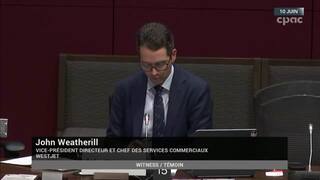
John Weatherill, WestJet, CPAC, Sep 23 and Oct 6
Fee transparency legislation is promised. Passenger protection rules are not mentioned.
Follow Stephen Taylor’s newsletter for federal budget intelligence, policy signals, and stakeholder-ready analysis.
Budget 2026 brief for airlines and airports: 40-to-50-year concessions for the four largest airports, and CATSA funded at $776 million for 2027-28 only.
Mobilising private investment to modernise Canada's airports
$42M over 5 years
Moves the four largest airports to 40-to-50-year operating concessions with fee rules and equity for the Canada Strong Fund and local Indigenous communities, plus a Traveller Biometrics Strategy (Chapter 1, s. 1.1).
Extending support for the operations of the Canadian Air Transport Security Authority
$776M in 2027-28
Keeps passenger screening funded for one year, with no amount booked from 2028-29 (Chapter 4 cost table).
Lowering costs for Canadians at the pump
$2,870M in 2026-27
Extends the fuel excise suspension, which covers aviation fuel, to the end of January 2027, then half rates to the end of March (Chapter 3, s. 3.1).
Improving regional air access, airport ground rent and fee transparency
No cost line
Promises new regional routes, a wider Airports Capital Assistance Program, a new ground rent formula and fee transparency legislation, paid from concession proceeds (Chapter 1, s. 1.1).
Kickstarting Canada's Investment Supercycle with the Productivity Mega Deduction
$36,055M over 5 years
Cuts the marginal effective tax rate on new investment in transportation and storage from 13.3 per cent to -2.3 per cent (Chapter 1, s. 1.1, Chart 1.1).
“The budget gives CATSA $776 million for 2027-28 and nothing after, while it plans airport concessions that run 40 to 50 years, so screening funding needs a horizon to match.”
“Concessions for the four largest airports cost $37.6 million to set up, and every promised regional route, ground rent change and capital program expansion waits on proceeds that start after an operator is picked by early 2029.”
“The tax rate on new investment in transportation and storage falls to -2.3 per cent against 8.6 per cent in the United States, which makes Canada the cheaper place to buy ground equipment and build hangars.”
This is a structural budget for airports and a cost budget for airlines. Airports get a new ownership model at the top, a ground rent change below it and new reporting rules for all. Airlines get fee rules they have not yet seen, one more year of screening money and a fuel tax that comes back in spring 2027. The budget says nothing on passenger protection rules, which WestJet raised before the budget, or on the rate of the air travellers security charge.
| Measure | Five-year net ($M) | 2026-27 ($M) | Starts | Home page |
|---|---|---|---|---|
| Mobilising private investment to modernise Canada's airports | 42 | 9 | 2026-27, operator by early 2029 | Transportation |
| Extending support for CATSA operations | 776 | 0 | 2027-28 | Transportation |
| Lowering costs for Canadians at the pump | 2,870 | 2,870 | Extended September 2, 2026 | Tax measures |
| Regional air access, ground rent and fee transparency | No cost line | No cost line | Not dated | Transportation |
| Productivity Mega Deduction | 36,055 | 2,015 | Announced September 15, 2026 | Tax measures |
Airport concessions. The $42 million combines $37.6 million over three years to prepare and run the first concession and $4.3 million over four years for the Traveller Biometrics Strategy (Budget 2026: Masters of Our Destiny, Chapter 1, s. 1.1). Experienced investors such as pension funds would operate the airports while Canada keeps the land and assets. The budget text does not name the four airports. This is the third budget document in a row to move on airports. Budget 2025 floated lease extensions, rent reform and privatisation (Budget 2025: Canada Strong, Chapter 1). The spring update proposed powers to collect airport data for an evaluation of reforms (Spring Economic Update 2026, Chapter 1). Budget 2026 is the first to pick a model.
CATSA. The full $776 million falls in 2027-28 and the table shows a dash after that, which means a further extension will be considered later (Budget 2026: Masters of Our Destiny, Chapter 4 cost table). The chapter text has no section on it. For airlines, screening capacity drives on-time departures, so a one-year horizon matters to schedules.
Fuel excise relief. The suspension on gasoline, diesel and aviation fuel began April 20, 2026 (Budget 2026: Masters of Our Destiny, Chapter 3, s. 3.1). The extension was announced September 2 and was already before Parliament in Bill C-38, so the budget books it without making it new. The chapter's examples are truckers and drivers. It does not estimate relief on aviation fuel.
Regional access, ground rent and fees. The four promises come with no cost line and "will be developed and released over time" (Budget 2026: Masters of Our Destiny, Chapter 1, s. 1.1). Budget 2025 already gave the Airports Capital Assistance Program $55.2 million over four years from 2026-27 (Budget 2025: Canada Strong, Chapter 1). The new step widens eligibility without new money in the tables.
Productivity Mega Deduction. Transportation and storage moves from a tax rate above the U.S. rate to one below it, against 8.6 per cent in the United States (Budget 2026: Masters of Our Destiny, Chapter 1, s. 1.1, Chart 1.1). The budget excludes certain long-lived buildings, so terminal buildings may not qualify. It does not list aircraft among the examples.
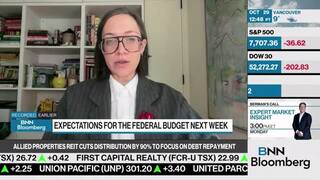
The reporters' expectation came true, and airports can claim the concession model as the reform they were consulted on. Airlines got little of what WestJet asked for. Fee transparency is a promise of legislation, while passenger protection costs and the security charge are untouched. Those, with a visitor refund and civil aviation capacity at Transport Canada, are the next cycle's agenda.
Asks compiled by Stephen Taylor's AI Public Affairs Toolset, September 15 to November 5, 2026.
Screening is the nearest cost risk. CATSA has money for 2027-28 and nothing booked from 2028-29 to 2030-31 (Budget 2026: Masters of Our Destiny, Chapter 4 cost table). The tax measures annex adjusts penalties under the Air Travellers Security Charge Act to inflation and does not change the charge (Tax Measures: Supplementary Information). If later funding falls short of demand, the cost of longer lines lands on airlines and airports.
Fees are the second risk. The budget promises "clear rules to protect travellers from unreasonable increases" in airport fees at concession airports (Budget 2026: Masters of Our Destiny, Chapter 1, s. 1.1). It does not say whether the rules cap fees, index them or tie them to service standards. A private operator paying for a 40-to-50-year concession will seek a return, and airlines will pay its charges.
The third is where the money goes. Proceeds "will be reinvested to benefit Canadians," and the budget names regional airports, air links between communities and local transportation as examples. It also says proceeds could help finance a sovereign broadband backbone (Budget 2026: Masters of Our Destiny, Chapter 1, s. 1.1). The fiscal tables show no concession proceeds, so the size of the pool is unknown.
Fuel costs return in steps. Aviation fuel excise comes back at half rates from February 2027 and at full rates on April 1, 2027 (Budget 2026: Masters of Our Destiny, Chapter 3, s. 3.1). The plan assumes WTI at US$85 in 2026 and US$79 in 2027 (Budget 2026: Masters of Our Destiny, Annex 1, Table A1.2). The global supply disruptions scenario, a longer Middle East conflict, raises the 2027-28 deficit to $66.1 billion from $62.5 billion (Budget 2026: Masters of Our Destiny, Annex 1). A longer conflict would also keep jet fuel costs high.
Inbound travel faces new friction. Visa-exempt visitors will have to submit a facial image with an eTA application, funded at $68 million net over four years from 2027-28 (Budget 2026: Masters of Our Destiny, Chapter 3, Additional investments). The CBSA's aging technology gets $192.5 million over four years, but only from 2027-28, and the budget says aging systems raise the risk of disruptions at airports (Budget 2026: Masters of Our Destiny, Chapter 6, s. 6.2).
The concession competition is the largest opening for investors and partners. The $37.6 million pays for due diligence, a concession framework, commercial and legal advice and a competitive process to pick the operator by early 2029 (Budget 2026: Masters of Our Destiny, Chapter 1, s. 1.1). The Canada Strong Fund and local Indigenous communities get equity stakes. Annex 3 lists the legislation to set up concessions (Budget 2026: Masters of Our Destiny, Annex 3).
Airports outside the four have three openings. The ground rent formula will be adjusted to support growth at airports that stay under the authority model. Smaller National Airports System airports will become eligible for the Airports Capital Assistance Program. New routes and infrastructure at smaller regional airports will be supported from proceeds (Budget 2026: Masters of Our Destiny, Chapter 1, s. 1.1).
The Traveller Biometrics Strategy brings airports, airlines, screening and border services together under a Special Advisor, with $4.3 million over four years from 2026-27. It may lead to digital credentials at checkpoints.
Demand gets support. The Canada Strong Pass is renewed for another summer at $76 million in 2027-28, and $300 million in 2027-28 funds programs for Canada's 160th anniversary (Budget 2026: Masters of Our Destiny, Chapter 4, s. 4.1). Hosting the 2028 Francophonie Summit brings $393.2 million over three years from 2027-28. In the North, defence plans include improvements at the Rankin Inlet and Inuvik airports (Budget 2026: Masters of Our Destiny, Chapter 5, s. 5.1).
The Productivity Mega Deduction lets operators write off most new equipment in full and permanently. The legislative proposals were released September 15, 2026 (Budget 2026: Masters of Our Destiny, Chapter 1, s. 1.1).
The government wants private capital to fund airport expansion and wants a share of the value for public use. It describes the concession model as part of "a more affordable, connected, and competitive air sector" (Budget 2026: Masters of Our Destiny, Chapter 1, s. 1.1). Chapter 6 lists airports first under "Getting more value from public assets," alongside the possible sale of other federal commercial assets (Budget 2026: Masters of Our Destiny, Chapter 6, s. 6.4).
This suggests the main aim is asset value and investment, with affordability protected by rules. Equity for the Canada Strong Fund lets the government say Canadians keep a stake. Equity for local Indigenous communities ties the airports to the reconciliation agenda that runs through the budget's major projects.
Fiscal rules shape the timing. Setting up concessions costs little in the plan, and the promises funded from proceeds carry no cost before those proceeds arrive. That keeps the aviation package light against a $62.3 billion deficit in 2026-27 (Budget 2026: Masters of Our Destiny, Annex 1, Table A1.8).
| Date | What happens | What it means for this client |
|---|---|---|
| April 20, 2026 | Fuel excise suspension on aviation fuel starts | Lower fuel tax for carriers |
| September 2, 2026 | Fuel excise relief extension announced | Relief runs to the end of January 2027 |
| September 15, 2026 | Productivity Mega Deduction announced, legislative proposals released | Draft rules for full write-offs are public |
| End of January 2027 | Full fuel excise relief ends | Half rates apply in February and March |
| April 1, 2027 | Fuel excise tax returns to standard rates | Full aviation fuel tax returns |
| 2027-28 | Last booked year of CATSA funding, CBSA technology and eTA biometrics funding begin | Screening money runs out on the books after this year |
| 2028 | Francophonie Summit in Canada | Added international arrivals |
| Early 2029 | First airport concession operator selected | First of the four largest airports changes operator |
For government. The budget gives CATSA $776 million for 2027-28 and nothing after, while it plans airport concessions that run 40 to 50 years, so screening funding needs a horizon to match. The supporting figure is the dash in every year from 2028-29.
For media. Concessions for the four largest airports cost $37.6 million to set up, and every promised regional route, ground rent change and capital program expansion waits on proceeds that start after an operator is picked by early 2029. The frame puts timing at the centre.
For investors. The tax rate on new investment in transportation and storage falls to -2.3 per cent against 8.6 per cent in the United States, which makes Canada the cheaper place to buy ground equipment and build hangars. The supporting figure is the drop from 13.3 per cent.
The NDP and groups such as the Canadian Shield Institute are likely to call the concessions privatisation by another name. They will point to 40-to-50-year terms and ask what stops fee increases.
The Conservatives are likely to focus on ticket prices. They will note that the fuel tax returns in April 2027 after they asked to make the cut permanent, and that the budget leaves the security charge and passenger rules alone. They will set airport proceeds against the $62.3 billion deficit.
Provincial and municipal governments around smaller airports will welcome the wider capital program and ask when the money comes. Regional carriers will press for a share of new route support.
The Parliamentary Budget Officer may ask why the fiscal plan books the cost of concessions and none of the proceeds. The business press will compare the plan with airport concessions abroad, which the budget says have been "used successfully in other countries." Travel reporters will look for anything that lowers fares in 2027 and find only the fuel tax relief.
The concession legislation in the budget implementation bill and the first request for qualifications are the next steps. The early-2029 operator date is the milestone that unlocks proceeds. The fee rules and the ground rent formula will come by regulation or bill, likely with consultation.
The 2027-28 Main Estimates will show the CATSA line and any amount for 2028-29. The spring economic update will show whether a further extension is booked. The eTA facial image rule and the CBSA systems upgrade will show up in processing and wait times from 2027-28.
Fuel costs come next. The plan assumes WTI of US$79 in 2027 and a dollar at 72.4 US cents (Budget 2026: Masters of Our Destiny, Annex 1, Table A1.2). Excise rates step up at the end of January and on April 1, 2027. Tourism demand through the Canada Strong Pass summer and the run-up to the 2028 Francophonie Summit is the other gauge.