Close the First Nations infrastructure gap
AFN, CBC News, Nov 4
It commits $32 billion over 10 years but never sizes the gap.
Federal Budget 2026 for First Nations: $32 billion over 10 years for on-reserve housing and infrastructure, but almost none of it flows before April 2027.
First Nations housing and infrastructure
$32 billion over 10 years
From 2027-28, $7,913 million booked to 2030-31
First Nations clean water
$4.6 billion over five years
Announced June 16, 2026
Elementary and Secondary Education Program on reserve
$5.8 billion over five years
From 2027-28
Jordan's Principle
$6 billion over six years
From 2026-27
Emergency Management Assistance Program
$865.6 million in 2026-27
For emergencies that occurred on reserve
This budget gives First Nations on reserve something they have not had before, 10 years of housing and infrastructure money that a council can plan around. The money starts in April 2027, so the rest of 2026-27 runs on emergency reimbursements, the June water package and the existing base.
| Change | Amount | Who in this group | When |
|---|---|---|---|
| Gain: 10-year housing and infrastructure commitment | $7,913 million booked to 2030-31, of $32 billion over 10 years | Communities on reserve | From 2027-28 |
| Re-announced: clean water and Bill C-37 | $4,611 million over five years | Communities on reserve | Announced June 16, 2026, paid from 2026-27 |
| Gain: elementary, secondary and post-secondary education | $4,796 million net | On-reserve schools and post-secondary students | From 2027-28 |
| Gain: Jordan's Principle | $6 billion over six years, part of a $5,253 million net line | First Nations children | From 2026-27 |
| Gain: health benefits, public health and policing, shared with Inuit | $3,998 million | First Nations and Inuit | From 2027-28 |
| Gain: emergency response and fire protection | $2,710 million | Communities on reserve | $866 million in 2026-27, then $461 million a year |
| Continuing loss: Budget 2025 expenditure review | $494.0 million a year at Indigenous Services Canada | Everyone the department serves | From 2026-27, ongoing |
| Expires inside the horizon | $119 million for Section 35 negotiations | Nations in treaty and self-government talks | Nothing booked for 2030-31 |
The new money dwarfs the expenditure review from 2027-28. In that year alone, First Nations-only lines book $3,612 million (calculated). The year under way, 2026-27, is the exception. Set aside the $866 million that reimburses past emergencies, and the only forward-looking First Nations-only money in 2026-27 is $180 million for clean water. Indigenous Services Canada is taking $494.0 million a year out of its own budget in the same year (Budget 2025, Annex 3, Table A3.15). The budget does not say how that cut is split across programs. It gives no per-person or per-community value for any measure.
| Measure | Amount | When | What it means for you |
|---|---|---|---|
| First Nations housing and infrastructure, 10-year commitment | $7,913 million to 2030-31 | From 2027-28 | $11 billion for core housing, $1.7 billion for shovel-ready homes, $18.5 billion for a new infrastructure program |
| First Nations clean water infrastructure and legislation | $4,611 million | From 2026-27 | Mostly paid in 2029-30 and 2030-31 |
| Supporting student success in First Nations communities | $4,796 million net | From 2027-28 | Five years of school funding, including adult education |
| Supporting Indigenous children and families | $5,253 million net | From 2026-27 | Jordan's Principle at about $1 billion a year (calculated) |
| Strengthening health and safety in Indigenous communities | $3,998 million | From 2027-28 | Health benefits for three years, policing money ongoing |
| Strengthening emergency preparedness in First Nations communities | $2,710 million | $866 million in 2026-27 | Past emergencies first, then $461 million a year |
| Federal Indian Boarding Homes (Percival) Settlement † | $44 million | 2026-27 | Funds the settlement this year only |
† Earlier decision booked in Budget 2026, Annex 1 policy-actions table, not a new Budget 2026 measure.
Three delivery details matter on reserve. The new First Nations On-Reserve Infrastructure Program "will consider opportunities to consolidate existing First Nations on-reserve infrastructure programs" (Budget 2026, Chapter 4, s. 4.3). Projects now in other streams may move. Jordan's Principle shows nothing new in the table for 2026-27 because $607 million of existing funds was moved into 2026-27 and 2027-28. A further $798 million in 2027-28 comes from existing departmental resources.
The water timing also has a likely cause. Budget 2025 renewed the First Nations Water and Wastewater Enhanced Program with $2.3 billion over three years from 2026-27 (Budget 2025, Chapter 3). The June 2026 package of $4.6 billion over five years jumps to $1,623 million in 2029-30, the first year after that renewal ends. This suggests the June package takes over from Budget 2025's money more than it adds to it in the early years.
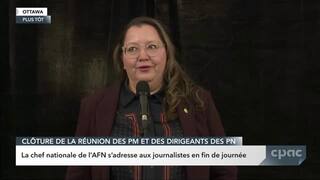
The budget met the asks that come with a cheque and missed the ones that need a negotiation. Specific claims, the police lawsuits and the joint tables all require Ottawa to settle or share decisions, and none of the three appears. The AFN says 31 of 39 First Nations police services are suing Canada. The policing money the budget books was announced on October 26, so it is a decision already made (Budget 2026, Chapter 4, cost table, note 5). The Prime Minister had promised "new measures and investments" for First Nations (Globe and Mail, Oct 26), and the 10-year housing money meets that promise in amount if not in timing.
Asks compiled by Stephen Taylor's AI Public Affairs Toolset, September 15 to November 5, 2026.
Communities on reserve gain the most. Housing, water, schools and emergency response all carry long or ongoing money, and each is tied to reserve land. The $11 billion for core housing is meant to maintain 119,000 existing units, build more than 6,900 homes and renovate more than 10,900 over the decade (Budget 2026, Chapter 4, s. 4.3). Schools get $5.8 billion over five years through the Elementary and Secondary Education Program from 2027-28. That picks up after the one-year $601 million the Spring Economic Update provided for 2026-27 (Spring Economic Update 2026, Chapter 2). Health benefits follow the same pattern, from $794 million for 2026-27 alone to $2.9 billion over three years.
Members living off reserve reach almost none of this. Their routes are general programs. The 2027 Canada Groceries and Essentials Benefit Supplement pays up to $339 for a single person in early 2027. At least 10% of the Build Canada Homes expansion goes to Indigenous housing by a distinctions-based formula, starting in 2028-29. The budget does not publish the formula or say how much reaches First Nations off reserve.
Nations in the First Nations fiscal institutions system get new financing. The Financial Management Board, Tax Commission and Infrastructure Institute are renewed with $78.5 million over four years and $20.6 million ongoing. The $500 million Monetisation Pilot borrows upfront through the First Nations Finance Authority. Annex 3 lets the Authority lend to Indigenous-owned special purpose vehicles, a common way to hold an equity stake. Governments in First Nations income tax arrangements would keep 99% of attributable revenue instead of 95%. That change comes through negotiations with no date or cost. Nations outside these systems gain nothing from them until they join.
Self-governing nations with settlement lands are not on reserve, and the on-reserve programs do not name them. The budget's one example for them is a $19.8 million Canada Infrastructure Bank investment with Kwanlin Dün First Nation in Whitehorse. It brings roads, water and utilities to settlement lands for more than 380 homes (Budget 2026, Chapter 3, s. 3.2). The Bank describes its financing as repayable.
Nations near major projects have an equity channel the rest do not. Seven Williams Treaties First Nations are buying into the Darlington New Nuclear Project with a $715 million federal-provincial loan guarantee. Tla'amin Nation is acquiring 100% of Western Forest Products' Stillwater Forest Operation under the Indigenous Loan Guarantee Program. The government offered 128 Indigenous groups in Alberta and British Columbia a 15% stake in Trans Mountain. At Roberts Bank Terminal 2, 27 First Nations have Mutual Benefit Agreements with the port authority. A nation far from a pipeline, mine or terminal cannot use this kind of support.
Households that want to own a home get a small new door. The Yänonhchia' Revolving Housing Finance Fund gets $150 million over five years for about 825 housing loans in 60 to 100 First Nations. That is about $182,000 per loan (calculated). First Nations contractors get a $7.5 million Surety-Bonding Pilot to help them bid on large construction contracts.
Atlantic First Nations get a line of their own. The Atlantic First Nations Water Authority receives $226.7 million over 10 years for 13 communities in New Brunswick, Prince Edward Island and Nova Scotia. The budget says the Authority has cut the average boil water advisory from 52 days to 6.
The budget is silent on how many long-term drinking water advisories remain. It reports 11 lifted between April 2025 and September 30, 2026. Budget 2025 counted 38 still active in 36 communities (Budget 2025, Chapter 3). Without a current count, communities cannot judge whether the back-loaded water money matches the remaining need.
Manitoba Premier Wab Kinew called for abolishing the Indian Act in the week before the budget (Hill Times, Oct 27). The budget instead pays to run parts of it. It books $8 million for land surveys and the online land registry the Act requires, and $42 million to process additions to reserve lands (Budget 2026, Chapter 4, cost table).
Budget 2025 said the Minister of Indigenous Services would coordinate a cross-government Indigenous Housing Strategy after engagement with First Nations on reserve (Budget 2025, Chapter 3). This budget does not mention that strategy. It has no First Nations early learning and child care line. Two programs also stop inside the horizon. The Non-Insured Health Benefits Program gets $2.9 billion over three years, so the health and safety line drops from $1,364 million in 2029-30 to $324 million in 2030-31. Section 35 negotiation funding also ends after 2029-30. Both return to the renewal queue before 2031.
| Date | What happens | What it means |
|---|---|---|
| Now (2026-27) | $865.6 million for the Emergency Management Assistance Program covers emergencies that occurred on reserve | Reimburses nations with unpaid emergency costs through Indigenous Services Canada |
| Before Parliament now | Bill C-37, the First Nations Clean Water Act, and Bill C-39, the Building Canada Strong Act | Committees are studying each bill |
| Early 2027 | One-time Groceries and Essentials Benefit Supplement is paid | Under the current program the benefit depends on a filed return |
| April 1, 2027 (2027-28) | Housing, infrastructure, schools, health benefits, policing and child welfare money starts | The new On-Reserve Infrastructure Program uses 10-year asset plans |
| 2027-28 | Yänonhchia' lending, the Surety-Bonding Pilot and the Monetisation Pilot begin | Affects contractors and borrowing nations |
| Budget Implementation Act, date not given | First Nations Fiscal Management Act amendment and the Indigenous Loan Guarantee Program's move into the Canada Infrastructure Bank | Opens a new lending route for equity partners |
| No date | Income tax revenue share rises to 99% and the groceries benefit cost gets a ceiling | The changes depend on negotiations with participating governments |
| 2028-29 | Build Canada Homes expansion begins, with at least 10% for Indigenous housing | The budget does not say how the distinctions-based formula treats First Nations off reserve |
| After 2029-30 | Health benefits and Section 35 negotiation funding need renewal | The 2028 and 2029 pre-budget rounds precede the renewal decision |