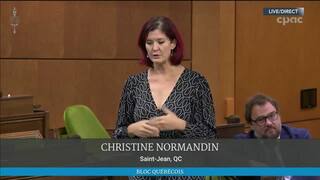
Deliver the promised $600 million for culture
Christine Normandin, Bloc Québécois, CPAC, Oct 22
It sits inside the $1,086 million media line.
Follow Stephen Taylor’s newsletter for federal budget intelligence, policy signals, and stakeholder-ready analysis.
Budget 2026 brief for broadcasters and news publishers: the $501 million journalism credit extension to broadcast newsrooms, CBC money and streaming rules.
Extending the Canadian Journalism Labour Tax Credit
$501M over 5 years
Private radio and television newsrooms can claim the refundable 35 per cent credit on up to $85,000 per employee for labour costs from Budget Day (Chapter 4, s. 4.1).
Supporting Canadian stories, journalism, and media
$1,086M over 5 years
Includes the $600 million for audio and audiovisual sectors announced in June, $300 million more for CBC/Radio-Canada and a permanent Local Journalism Initiative (Chapter 4, s. 4.1).
New policy directions for the Online Streaming Act
No cost line
New directions to the CRTC will reshape the framework that sets streamer contributions to Canadian content, with no detail or date (Chapter 4, s. 4.1).
Making online spaces safe for everyone
$177M over 5 years
A new Digital Safety and Data Protection Commission enforces duties on social media and AI chatbot services, including labelling of synthetic content (Chapter 5, s. 5.2).
Kickstarting Canada's Investment Supercycle with the Productivity Mega Deduction
$36,055M over 5 years
Permanent immediate expensing of most capital, which the budget says covers arts and media producers, from studio equipment to transmitters (Chapter 1, s. 1.1).
“Broadcast newsrooms now get the same 35 per cent labour credit as print, and the $501 million measure will lose much of its value when the enhanced rate expires at the end of 2028.”
“Of the $1,086 million media package, $900 million (calculated) goes to the audiovisual sector and CBC/Radio-Canada, and private local newsrooms depend on a $134 million Local Journalism Initiative.”
“The government says trusted local reporting holds institutions to account, and its own advertising budget is the one source of support for local news that the budget leaves untouched.”
For a private broadcaster with a newsroom, Budget 2026 is the best federal budget in years on labour costs. For a print publisher it holds the line, keeping the 35 per cent rate two more years. For both, the structural problems of advertising revenue and platform dependence sit outside the budget.
| Measure | Net 5-year cost ($M) | 2026-27 ($M) | Start | Source |
|---|---|---|---|---|
| Journalism Labour Tax Credit extension | 501 | 16 | November 5, 2026 | Chapter 4, s. 4.1 |
| Canadian stories, journalism, and media | 1,086 | 750 | 2026-27 | Chapter 4, s. 4.1 |
| Online Streaming Act policy directions | – | – | Not dated | Chapter 4, s. 4.1 |
| Making online spaces safe | 177 | 8 | 2026-27 | Chapter 5, s. 5.2 |
| Productivity Mega Deduction* | 36,055 | 2,015 | 2026-27 | Chapter 1, s. 1.1 |
* Includes funding classified as capital investment.
1. Journalism credit. The Spring Economic Update 2026 announced the extension to audio and audiovisual news, and Budget 2026 sets its terms (Budget 2026: Masters of Our Destiny, Chapter 4, s. 4.1). Broadcast newsrooms that qualify as Canadian journalism organisations get the 35 per cent rate on up to $85,000 per employee. Print keeps the enhanced rate to December 31, 2028, two years past its scheduled end. Before the enhancement the rate was 25 per cent (Tax Measures: Supplementary Information). CBC/Radio-Canada is a Crown corporation and does not qualify as a private organisation.
2. Media package. The $1,086 million combines five items (Chapter 4, s. 4.1). The $600 million for audio and audiovisual sectors was announced June 3, 2026, so it is booked here but not new on Budget Day. CBC/Radio-Canada gets $300 million over two years from 2026-27. The Local Journalism Initiative gets $134 million over four years from 2027-28 and $41 million ongoing. The rest goes to a digital book collection and the Canada Book Fund. With $750 million in 2026-27 and $45 million in 2028-29, the package falls off sharply after its second year.
3. Streaming directions. The government will issue "new policy directions for the Online Streaming Act" to keep Canadian content "accessible and affordable for Canadians" (Chapter 4, s. 4.1). The phrase about affordability suggests the directions may limit what streamers pay into Canadian content funds. Broadcasters that receive money from those funds, or that compete with streamers for audiences, cannot plan around directions that have no date.
4. Online safety. The Digital Safety and Data Protection Commission gets $176.3 million over five years to enforce Bill C-34, the Safe Social Media Act (Chapter 5, s. 5.2). Its duties fall on social media and AI chatbot services. The labelling of synthetic content and rapid removal of deepfakes affect the platforms that carry news, and the budget does not say whether news publishers' own sites are covered.
5. Productivity Mega Deduction. The budget lists "arts and media producers" among those who benefit (Chapter 1, s. 1.1). Studio, transmission and production equipment can be written off immediately on a permanent basis. Its value depends on the outlet having taxable income to deduct against.
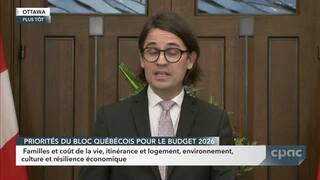
Asks compiled by Stephen Taylor's AI Public Affairs Toolset, September 15 to November 5, 2026.
The funding asks from the industry's side were met, and broadcasters can claim the credit extension as a win. The non-spending asks, on advertising and streaming payments, are unresolved and form the agenda for the Spring Economic Update 2027.
The government ties media policy to sovereignty. Chapter 4 opens with the line that "being sovereign means building a country where Canadian culture in all its diversity and creativity thrives," and names CBC/Radio-Canada as one of the institutions that will be supported (Budget 2026: Masters of Our Destiny, Chapter 4). Local news is presented as part of the same argument, with the budget saying it helps build "a country where we are masters of our destiny."
The choice of tools reflects the fiscal framework. The deficit is $62.3 billion in 2026-27 (Annex 1, Table A1.8). A refundable credit tied to newsroom payrolls scales with employment and needs no new program staff. The streaming directions cost the treasury nothing. The government is protecting news jobs without taking on the harder fights over platform payments and advertising.
| Date | What happens | What it means for this client |
|---|---|---|
| June 3, 2026 | $600 million for audio and audiovisual sectors announced | Already in the media line booked in this budget |
| September 15, 2026 | Productivity Mega Deduction proposals released | Capital write-off rules for equipment |
| November 5, 2026 | Journalism credit opens to broadcast newsrooms | Eligible labour costs start counting |
| 2026-27 | First year of $300 million more for CBC/Radio-Canada; Digital Safety and Data Protection Commission funded | A better-funded public broadcaster and a new online regulator |
| May 2027 | CBC/Radio-Canada enters Eurovision in Burgas, Bulgaria | A high-profile CBC broadcast with no separate federal funding |
| 2027-28 | Local Journalism Initiative renewal and Canada 160 programs begin | New grant year for local news. Federal anniversary events |
| Spring Economic Update 2027 | Canada Creative Credit details | Possible tax relief for freelance contributors |
| 2028 | Francophonie Summit in the National Capital Region | Major event in French-language markets |
| 2028 taxation year | $1,000 penalty for journalism organisations that fail to file | Higher cost of late filing |
| December 31, 2028 | Enhanced 35% journalism credit rate ends | Credit value falls from 2029 |
The Official Opposition will lead with the $62.3 billion deficit and $60.2 billion in public debt charges in 2026-27 (Budget 2026: Masters of Our Destiny, Annex 1, Table A1.8). It has long opposed CBC funding and will attack the $300 million as money for a broadcaster it wants to defund. It is likely to say the journalism credit makes newsrooms dependent on government. That line will be aimed at every outlet that claims it.
The Bloc Québécois will claim the $600 million and the broadcast credit as wins. It will press for streaming directions that raise what platforms pay for Quebec culture. The NDP will say local news needs more than $41 million a year in the long run.
Press coverage will be divided. Outlets that benefit will report the credit factually, and critics in the business press will question whether a news organisation can cover the government that funds its payroll. The Parliamentary Budget Officer is likely to cost the credit after 2028 at the base rate and note the drop. Streaming companies and their U.S. trade allies will watch the Online Streaming Act directions closely, given the tariff context in the budget.