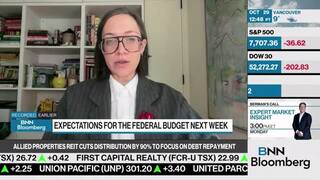
Public debate before monetizing the four major airports
Vass Bednar, Canadian Shield Institute, BNN, Oct 29
Concession legislation and an operator by early 2029.
Follow Stephen Taylor’s newsletter for federal budget intelligence, policy signals, and stakeholder-ready analysis.
Budget 2026 for pension funds: 40- to 50-year airport concessions, a $25 billion Canada Strong Fund co-investor and a CPP rate cut booked at $305 million.
Mobilising private investment to modernise Canada's airports
$42M over 5 years
Long-term operating concessions for the four largest airports, with pension funds named as likely operators and the first operator chosen by early 2029 (Chapter 1, s. 1.1).
Canada Strong Fund (sovereign wealth fund)
$25B over 3 years, no accrual cost line
A federal fund that co-invests on private terms and takes equity in airport concessions, making it both a partner and a rival for pension capital (Chapter 2, s. 2.1).
Unleashing billions for Canadian businesses with the Canada Investment Summit
$181M over 5 years
Invest in Canada adds financial-sector expertise and runs future summits after pension funds, insurers and institutional investors committed nearly $100 billion (Chapter 1, s. 1.1).
Renewing the public service – savings on CPP employer contribution costs
-$305M over 5 years (saving)
Ottawa books its employer saving from the base CPP rate cut and restores the coordinated 2% public sector pension accrual, at no stated cost (Chapter 6, s. 6.3; Annex 3).
Registered pension plans
-$148M over 5 years (revenue)
A 10 per cent tax on revoked plans and tighter individual pension plan rules from 2027 and 2028 (Chapter 6, cost table; Tax Measures: Supplementary Information).
“Pension funds, insurers and institutional investors committed nearly $100 billion to Canadian assets at the Canada Investment Summit, and long-term concessions and co-investments can turn those commitments into built projects.”
“The base CPP rate cut leaves more money with workers and employers, saving the federal employer alone $305 million over five years, and the budget states that current benefits are not reduced.”
“Under the 40- to 50-year airport concessions, Canada keeps ownership of airport lands and assets, fees face clear rules, and the government is spending $37.6 million to run a competitive process.”
The budget treats pension capital as the private half of its project list. It costs the treasury little: the five measures below net to a saving of $230 million (calculated) over five years. The value to a fund lies in deal flow, and the cost lies in sharing that flow with new federal players.
1. Mobilising private investment to modernise Canada's airports. Five-year net: $42 million, with $9 million in 2026-27 (Budget 2026: Masters of Our Destiny, Chapter 1, s. 1.1). The core is $37.6 million over three years for due diligence, the concession framework, advice and a competitive process to pick the first operator by early 2029. The chapter names "Canada's pension funds" as the kind of experienced investor it wants for 40- to 50-year concessions, with Canada keeping the land and assets. For a fund, this is a rare chance at large brownfield assets with regulated cash flows. Proceeds are earmarked for regional air access and possibly a sovereign broadband backbone, so the sale price is politically visible.
2. Canada Strong Fund (sovereign wealth fund). $25 billion over three years, first announced in the Spring Economic Update 2026, with no row in the accrual cost tables (Budget 2026: Masters of Our Destiny, Chapter 2, s. 2.1). Legislation "in the coming months" would make it a standalone Crown corporation. Until then it sits under the Canada Development Investment Corporation with its own board and CEO. Stream 1 takes minority co-investments on terms that mirror private investors. Stream 2 makes selective commercial investments. For a pension fund, the Fund is a co-investor on Major Projects Office and Canada Infrastructure Bank deals. In Stream 2 it can bid for the same assets.
3. Unleashing billions for Canadian businesses with the Canada Investment Summit. Five-year net: $181 million, starting with $50 million in 2027-28, then $40.4 million ongoing (Budget 2026: Masters of Our Destiny, Chapter 1, s. 1.1). Invest in Canada adds financial-sector expertise and will run future summits. The budget lists the nearly $100 billion committed by "pension funds, insurers, and institutional investors" as a result of the government's plan. Those pledges are now a published benchmark the government will report against.
4. Renewing the public service – savings on CPP employer contribution costs. Five-year net: -$305 million, starting at -$17 million in 2026-27, then $78 million a year ongoing (Budget 2026: Masters of Our Destiny, Chapter 6, s. 6.3). The saving comes from the base CPP rate cut to 9.5% from 9.9%, effective January 1, 2027 (Spring Economic Update 2026, Annex 2). The spring update said the 32nd Actuarial Report put the minimum contribution rate at least 69 basis points below the legislated rate. Annex 3 separately restores the coordinated 2% accrual for the public service, RCMP and Canadian Forces plans, with no cost shown. The budget does not say how contributions to the federal plans change as a result.
5. Registered pension plans. Five-year net: -$148 million in revenue, starting with $50 million in 2028-29. A plan whose registration is revoked after 2026 would pay a special tax of 10 per cent of its property's fair market value and become a retirement compensation arrangement. Individual pension plan definitions tighten on January 1, 2027, and non-qualified investment and excessive surplus rules follow on January 1, 2028 (Tax Measures: Supplementary Information, Personal Income Tax Measures). Large multi-employer and public sector plans are unlikely to face revocation. The new tax still raises the stakes of any registration dispute with the CRA. A separate CRA death-notice measure books another $30 million.
Asks compiled by Stephen Taylor's AI Public Affairs Toolset, September 15 to November 5, 2026.
No pension fund or pension fund association ask appears in the pre-budget record, so the funds go into the next cycle with no public scorecard of their own. Reporters had predicted the budget would detail the sovereign fund and the airport plan, and it did both. The one recorded ask on airports, for a wider public debate first, went the other way, which leaves the funds facing that argument as bidders.
A federal fund beside you. The Canada Strong Fund and Indigenous communities get equity in airport concessions, and the budget sets neither the size of those stakes nor their price (Budget 2026: Masters of Our Destiny, Chapter 1, s. 1.1). Every point of equity granted to them is a point an operator does not own.
Concessional capital in commercial deals. The government "expects financing Crown corporations to have a greater risk tolerance than private sector peers" and says this money should complement private capital (Budget 2026: Masters of Our Destiny, Chapter 6, s. 6.3). If Crown lenders accept lower returns on the same projects, a pension fund's commercial pricing can lose the deal or dilute its terms.
Regulated fees. Airport fees in ticket prices would face "clear rules" against unreasonable increases, and further legislation would improve fee transparency. These rules will set the revenue ceiling on a 40- to 50-year asset, and the budget publishes none of them yet.
Liability matching. The 30-year program stays at $24 billion in both 2026-27 and 2027-28, with 8 planned auctions (Budget 2026: Masters of Our Destiny, Annex 2, Tables A2.3 and A2.6). The private sector average puts the 10-year yield at 3.6% in 2026 and 3.8% in 2027 (Annex 1, Table A1.2). Annex 1 shows a sustained 100-basis-point rise would cost the federal balance $7.9 billion by year four. For a defined benefit fund, the same shock lowers liabilities and asset values together.
Plan rules and disclosure. The 10 per cent revocation tax and the IPP excessive surplus test add penalties to registration failures. Climate and ESG disclosure for federally regulated pension plans continues to advance, with no timeline (Budget 2026: Masters of Our Destiny, Chapter 1, s. 1.4).
The first airport concession process runs to early 2029, and Annex 3 lists the legislation needed to create the concessions. Canada Strong Fund co-investments attach to Canada Infrastructure Bank loans, Strategic Response Fund contributions and Major Projects Office projects. The CIB moves to the Minister of Finance with a mandate focused on loans and loan guarantees, and the Indigenous Loan Guarantee Program consolidates inside it (Budget 2026: Masters of Our Destiny, Chapter 6, s. 6.3). That puts Indigenous equity financing and senior debt for major projects in one Crown, which suits funds that partner with First Nations owners.
Project supply is growing. The Major Projects Management Entity gets $187.4 million over five years, and the Mackenzie Valley Highway carries $3,100 million in capital funding. The government will also explore divesting non-core federal commercial assets and new ways, with provinces, to finance the largest electricity projects. Neither comes with a list or a date.
On tax and markets, treaty talks with Qatar, Saudi Arabia and Australia aim to keep Canada "a competitive location for future investments by pension funds and sovereign wealth funds" (Budget 2026: Masters of Our Destiny, Chapter 2, s. 2.2). Annex 3 eases federal plan administration through electronic communications and lets certain PRPP members set their own contribution rates. Draft taxonomy criteria for electricity, transportation and buildings are due by the end of 2026, and a Sustainable Bond Framework will follow them. The October 2026 green bond raised $2 billion, with responsible investors taking 44% (Budget 2026: Masters of Our Destiny, Annex 2).
The government wants domestic institutional capital to finance its build agenda and wants Canadians to share in the returns. Chapter 2 says "Canadians deserve a stake" in nation-building projects. The airport model, the Canada Strong Fund and Canada Strong Notes for retail savers, due in 2027, all express that aim. Chapter 1 restates the goal of catalysing up to $1 trillion in investment over five years, including $500 billion in new private investment.
Fiscal pressure explains the approach. The budgetary deficit is $62.3 billion in 2026-27 (Budget 2026: Masters of Our Destiny, Annex 1, Table A1.8). The operating balance anchor is met partly by counting forgone revenue from capital incentives as revenue (Annex 1, Table A1.6). Concessions and co-investments add assets without adding program spending.
| Date | What happens | What it means for this client |
|---|---|---|
| End of 2026 | Draft Made-in-Canada sustainable investment criteria for electricity, transportation and buildings | Defines which infrastructure assets carry a green or transition label |
| January 1, 2027 | Base CPP rate falls to 9.5% from 9.9% (Spring Economic Update 2026). The new IPP definition applies, and the revocation tax covers plans revoked after 2026 | Lower contribution inflows to the CPP, tighter rules for small related-member plans and a 10 per cent tax on plan property in any revocation |
| February 2027 | Sustainable Finance Conference hosted by the Canadian Climate Institute | Investors see the taxonomy and pipeline the Sustainable Bond Framework will use |
| 2027 | Canada Strong Notes launch through participating financial institutions | A principal-protected retail product competing for household retirement savings |
| 2027-28 | Invest in Canada expansion funding begins | Federal investment promotion aimed at the same global capital funds raise |
| January 1, 2028 | IPP non-qualified investment and excessive surplus rules apply | Small plans holding over 200 per cent of liabilities become revocable |
| Early 2029 | First airport concession operator selected | The first contract that shows the equity split and fee rules |
Airports are the exposed file. The Canadian Shield Institute has already argued the sale needs a wider debate, and the NDP and consumer groups are likely to frame concessions as privatisation with fee risk. A pension fund named as a probable bidder becomes part of that story. The government's own text, with Canada keeping ownership and fee rules promised, is the counterweight.
The Official Opposition is likely to attack the $25 billion Canada Strong Fund for sitting outside the accrual tables and to question a government fund picking companies. The Parliamentary Budget Officer may ask how the Fund's borrowing and any losses would reach the budgetary balance. Provinces agreed unanimously to the CPP rate cut in the spring, so it is unlikely to draw provincial fire. Public service unions may focus on the coordinated accrual change and the early retirement savings in the same chapter.
Business and financial press will measure the Summit's nearly $100 billion against deals actually signed. That puts pension funds' announced commitments, and their domestic investment share, back in the headlines.