Federal Budget 2026: Expenditure Review Explained
Federal Budget 2026 finds $2,053 million in new savings that only fill a Budget 2025 placeholder, while Annex 1 trims forecast spending $12.4 billion a year.
- Annex 1 cuts forecast direct program spending by about $12.4 billion a year without naming a department, more than the $11.2 billion operating surplus projected for 2027-28.
- The $2,053 million in new Chapter 6 savings and revenue fills a Budget 2025 placeholder and leaves the deficit unchanged, with about $5.9 billion of that placeholder still unfound through 2030-31 (calculated).
- The public service is already about 36,000 employees below its peak, 90% of Budget 2025's 40,000-position goal with more than two years to spare (calculated).
Budget 2026 has no expenditure review annex. The review now runs through Chapter 6, A more efficient government, and the expense forecast in Annex 1. Chapter 6 and Budget 2025's Annex 3 are in millions of dollars, Annex 1 in billions. The wider fiscal picture is in the fiscal deep dive.
The Savings Target
What Chapter 6 adds
Section 6.3, Lowering the costs of government, books $2,053 million in savings and revenue over 2026-27 to 2030-31. The next line adds back $2,064 million of "amounts provisioned in Budget 2025 for future reviews" (Budget 2026, Chapter 6, cost table). Budget 2025 had already counted these savings in its deficit forecast, so naming them does not move the deficit.
| Millions of dollars | 2026-27 | 2027-28 | 2028-29 | 2029-30 | 2030-31 | Five years |
|---|---|---|---|---|---|---|
| Fines and penalties | 0 | -17 | -28 | -65 | -77 | -186 |
| Tax compliance, net of CRA cost | … | -224 | -262 | -279 | -297 | -1,063 |
| Operating budgets aligned with early-retirement savings | … | -100 | -100 | -100 | -100 | -400 |
| CPP employer contribution savings | -17 | -69 | -71 | -73 | -75 | -305 |
| Canada Post, net of projected savings | 28 | 32 | -9 | -53 | -100 | -102 |
| Streamlining federal financing | 1 | 2 | 0 | 0 | 0 | 3 |
| Total, s. 6.3 | 11 | -375 | -470 | -571 | -649 | -2,053 |
| Less: provisioned in Budget 2025 for future reviews | … | 375 | 470 | 571 | 649 | 2,064 |
Figures from the Budget 2026, Chapter 6 cost table. The tax compliance and Canada Post rows net the printed revenue and savings lines against the printed costs (calculated).
A negative figure means offsets or revenue exceed the gross cost, a net gain to the budgetary balance.
Six of every ten dollars in the package are projected revenue (calculated). Fines and tax audits supply $1,249 million of the $2,053 million (calculated). Cuts to departmental budgets supply $705 million, from early-retirement savings and lower CPP payroll costs (calculated).
The CRA gets $116.5 million over four years from 2027-28 for non-filers, trust returns and corporate refunds. The budget expects "upwards of $1.2 billion in additional revenue" in return (Budget 2026, Chapter 6, s. 6.3). That is about ten dollars back for each dollar spent (calculated). Budget 2026 does not say whether Budget 2025's separate CRA line of $3,985 million is on track.
The fines package raises OSFI's maximum penalties, indexes fixed tax penalties and updates fines under food inspection and fisheries statutes. It brings in about $186 million over four years from 2027-28 (Budget 2026, Chapter 6, s. 6.3). The tax penalty changes are on the tax measures page.
The Budget 2025 placeholder
Budget 2025 targeted "additional savings of $7.75 billion over three years, starting in 2027-28, and $3.25 billion ongoing" under Optimizing Productivity in Government (Budget 2025, Chapter 5). The spring update counted a 20% cut to external management and other consulting toward that target. It saves $450 million in 2027-28 and $900 million a year from 2028-29, on about $5 billion of spending in 2024-25 (SEU 2026, Economic and Fiscal Overview).
Savings still to be identified after this budget and the consulting cut are $0.5 billion in 2027-28. From 2028-29 to 2030-31 they average $1.8 billion a year (Budget 2026, Chapter 6, cost table, note 3). Taking this budget's lines and the consulting cut from $3.25 billion leaves $1,880 million in 2028-29 and $1,701 million in 2030-31 (calculated). This implies the "future reviews" provision is the Budget 2025 productivity target.
Over the three years Budget 2025 named, $3,666 million of the $7.75 billion is now identified, or 47% (calculated). About $5.9 billion is still unfound from 2027-28 to 2030-31 (calculated). The spring update promised other review results in Budget 2026, and only the contracting and federal financing reviews reported. Reviews of business innovation and of skills and youth programming are still under way. If the remaining savings come from them, those programs absorb about $1.8 billion a year of cuts from 2028-29.
Chapter 6 restates Budget 2025's commitment to save $13 billion a year by 2028-29 through the Comprehensive Expenditure Review. It prints no updated table of that review by year or by organisation.
The $12.4 billion forecast cut
The largest spending reduction in Budget 2026 sits outside Chapter 6. Annex 1 lowers projected direct program expenses "by about 4.5% or approximately $12.4 billion per year over the forecast horizon, before new measures." It calls this "an aggregate forecasting adjustment, largely for non-defence, non-capital investments" that "does not change approved funding" (Budget 2026, Annex 1, box on the direct program expense forecast).
| Billions of dollars | 2026-27 | 2027-28 | 2028-29 | 2029-30 | 2030-31 |
|---|---|---|---|---|---|
| Lower direct program expenses since the spring update | 1.5 | 14.4 | 13.6 | 15.2 | 17.3 |
| Day-to-day operating balance | -3.5 | 11.2 | 20.3 | 24.6 | 25.2 |
| Budgetary balance | -62.3 | -62.5 | -57.6 | -53.4 | -52.9 |
Figures from Budget 2026, Annex 1, Table A1.7 (row 2.3, where a positive number improves the balance), Table A1.6 and Table A1.8.
The cut is back-loaded. It is $1.5 billion in the budget year and $17.3 billion by 2030-31. Over five years it totals $62.0 billion, about 30 times the $2,053 million that Chapter 6 identifies (calculated).
The operating anchor rests on it. The government says day-to-day operating spending is balanced by revenues from 2027-28, a year early. If departments spend their approved funding that year, the $14.4 billion revision exceeds the $11.2 billion operating surplus (calculated). Part of the revision is a discount-rate effect on employee benefits that the budget says is offset in other expense lines, so the true gap is somewhat smaller.
The 2028-29 revision of $13.6 billion is larger than the Comprehensive Expenditure Review's spending cuts for that year. Budget 2025 put them at $12,842 million in 2028-29, before CRA revenue gains, and listed every organisation's share (Budget 2025, Annex 3, Table A3.1). The revision lists none.
The budget's case is lapsed spending. Preliminary 2025-26 results showed "considerably lower expenses than foreseen" (Budget 2026, Annex 1). Approved money that is delayed can still be spent later. Direct program expenses excluding capital grow 0.2% a year on average to 2030-31, against GDP inflation of 1.6% to 1.9% a year from 2027 to 2030. With the adjustment aimed largely at non-defence spending, this implies the squeeze falls on non-defence operations and transfers.
Cuts by Organisation
Budget 2026 does not break savings down by organisation. The latest record is Budget 2025's Annex 3, which spread the review's $44,217 million over 2026-27 to 2029-30 across 26 organisations. Budget 2026 neither confirms nor revises those amounts.
| Organisation (Budget 2025, Annex 3) | 2026-27 | 2029-30 | Ongoing | Four years |
|---|---|---|---|---|
| Public Safety (incl. RCMP) | 1,762.2 | 1,671.7 | 952.2 | 6,918.0 |
| Housing, Infrastructure and Communities (incl. CMHC) | 786.0 | 1,698.9 | 1,702.2 | 5,399.7 |
| Innovation, Science and Industry | 884.6 | 1,227.2 | 1,227.2 | 4,381.0 |
| Veterans Affairs | 1,186.0 | 788.0 | 374.0 | 4,233.0 |
| Global Affairs Canada | 574.7 | 1,148.1 | 1,148.7 | 3,636.2 |
| Employment and Social Development Canada | 157.2 | 781.5 | 781.5 | 2,240.6 |
| Immigration, Refugees and Citizenship | 282.3 | 613.5 | 614.2 | 2,061.8 |
| Indigenous Services | 494.0 | 494.0 | 494.0 | 1,976.0 |
| Natural Resources Canada | 268.0 | 669.5 | 699.0 | 1,932.3 |
| National Defence | 479.3 | 480.2 | 477.2 | 1,919.3 |
| Transport | 402.0 | 478.6 | 455.0 | 1,745.0 |
| Public Services and Procurement | 275.3 | 528.6 | 523.1 | 1,696.7 |
| Health Canada | 105.6 | 382.5 | 382.6 | 1,155.1 |
| Environment and Climate Change Canada | 245.4 | 299.6 | 319.9 | 1,100.2 |
| Regional development agencies | 104.9 | 193.3 | 193.3 | 637.2 |
| Canadian Heritage | 78.0 | 205.4 | 205.4 | 610.9 |
| Fisheries and Oceans | 54.5 | 193.8 | 192.7 | 544.0 |
| Agriculture and Agri-Food Canada | 113.1 | 156.4 | 156.4 | 507.1 |
| Federal research granting councils | 83.0 | 83.0 | 83.0 | 332.0 |
| Crown-Indigenous Relations and Northern Affairs | 69.3 | 69.3 | 69.3 | 277.2 |
| Canada Revenue Agency | 43.9 | 80.2 | 113.5 | 274.0 |
| Treasury Board | 34.3 | 68.7 | 68.7 | 217.5 |
| Justice | 28.8 | 57.8 | 57.8 | 184.7 |
| Privy Council Office | 18.4 | 36.3 | 36.3 | 116.9 |
| Finance | 14.1 | 28.1 | 28.1 | 89.0 |
| Women and Gender Equality | 8.0 | 8.0 | 8.0 | 32.0 |
Millions of dollars, accrual basis, from Budget 2025, Annex 3, Tables A3.2 to A3.27. The four-year column sums 2026-27 to 2029-30 (calculated).
Two rows overstate the cash. The RCMP saves $6,080 million over four years on an accrual basis and $193 million in cash (calculated from Budget 2025, Annex 3, Tables A3.20 and A3.20.1). Veterans Affairs saves $4,233 million on an accrual basis and $418 million in cash (Budget 2025, Annex 3, Table A3.24.1). Both savings are mostly actuarial changes to future benefits, such as cutting the medical cannabis reimbursement to $6.00 a gram from $8.50. Together the two are 23% of the review's total and save $611 million in cash over four years (calculated).
What Is Actually Being Cut
Budget 2026 adds few program cuts of its own. Its new savings come from revenue, payroll and Canada Post. The program reductions still in force are Budget 2025's.
Budget 2026's own lines. The early-retirement line removes operating money from departments where departures exceeded planned reductions, and the budget does not name them. The CPP line is a payroll saving from the cut in the base CPP rate from 9.9% to 9.5% on January 1, 2027 (SEU 2026, Annex 2). No program changes. Canada Post's net saving comes from moving urban door-to-door delivery to community mailboxes and raising stamps to $2.00 from 2027. Details are on the Crown corporations page.
Reviews with results but no cost line. The contracting review found $55 million in cost avoidance on existing contracts and $117 million less in planned procurement spending (Budget 2026, Chapter 6, s. 6.3). Neither figure appears in the cost table. The federal financing review proposes merging BDC and EDC into one development bank, with no savings estimate.
Budget 2025's program cuts. Recalibrating government programs was $5,404 million of the review's $12,842 million in 2028-29, or 42% (calculated). Most of the rest, $6,950 million, was modernising government operations, a theme that also holds the RCMP and veterans benefit changes (Budget 2025, Annex 3, Table A3.1). Budget 2025 named the programs. CMHC winds down programs that do not directly add housing supply and dropped the Canada Secondary Suite Loan program. ISED does not renew the Net Zero Accelerator. Global Affairs cuts global health funding and returns the International Assistance Envelope to pre-COVID levels (Budget 2025, Annex 3).
Budget 2026 carries parts of that plan forward. Annex 3 proposes moving administration of the Canada Small Business Financing Program from ISED to BDC. Chapter 6 continues work to commercialise the NRC's Canadian Photonics Fabrication Centre, an NRC review item in Budget 2025. It also intends to explore selling non-core federal commercial assets, with no list, proceeds or timeline.
The Public Service
The workforce target is nearly met. The public service fell from about 368,000 employees at its 2023-24 peak to about 332,000 in August 2026 (Budget 2026, Chapter 6). Budget 2025 aimed for roughly 330,000 by 2028-29 (Budget 2025, Chapter 5). About 2,000 positions remain to go on that path (calculated).
More than 10,000 people applied for the Early Retirement Incentive between March and July 2026. Budget 2025 put its net cost at $1.5 billion over five years, and Budget 2026 gives no update. Where departures ran ahead of plan, departments lose part of the personnel savings. The cut is $400 million over four years from 2027-28 and $100 million a year after that, in the 2027-28 Main Estimates (Budget 2026, Chapter 6, s. 6.3).
The lower CPP rate saves the government $305 million over five years on a payroll of more than 400,000 people, including the Canadian Armed Forces and the RCMP. The budget says employee benefits do not fall.
Annex 3 proposes to amend the three federal superannuation acts to "restore the coordinated pension accrual of 2% of salary per year of service" alongside the CPP or QPP. Budget 2025 planned to end over-contribution after the CPP enhancement and booked $1.1 billion in savings over four years from 2026-27 (Budget 2025, Chapter 5). This appears to be that change written into law, and Budget 2026 prints no separate cost or saving for it.
The budget gives no wage or bargaining assumption. It says compensation costs should be "fair and reasonable, while aligning with Canadian labour market trends and our fiscal position" (Budget 2026, Chapter 6, s. 6.3). It is silent on the 1,000-position cut to the executive cadre that Budget 2025 set for two years. Digital Transformation Canada's fund for government IT is covered on the tech and AI page.
Who Feels It
- Public servants and the National Capital Region. Departments with heavy early-retirement take-up lose operating money from 2027-28, and no list exists. Annex 4 rates both public service savings lines as affecting "All demographics," with no regional or gender breakdown. See public servants, National Capital Region and who benefits.
- Non-filers, trusts and corporations claiming refunds. The CRA's compliance work from 2027-28 supplies most of the package's revenue. See taxpayers.
- Farmers, fishers and financial institutions. Food inspection fines rise, the Fisheries Act gets an administrative penalty regime and OSFI's maximum penalties go up. See farmers, fishers and financial services.
- Mail users. The budget estimates dearer stamps cost consumers about $6 a year and small businesses about $9. See rural and remote.
- Clients of Budget 2025's program cuts. CMHC housing programs, ISED innovation programs and Global Affairs development aid carry the largest program reductions. See housing, tech and innovation, trade and veterans.
- Next in line. About $1.8 billion a year is still to be found while the business innovation and skills and youth reviews run. See young workers and students.
Asked For vs. Delivered
| Ask or expectation | Source | In the budget? |
|---|---|---|
| Cut federal spending by around $60 billion a year | CTF, National Post, Sep 16; Western Standard, Sep 21; FINA, Oct 5 | Went the other way. Total expenses rise to $602.6 billion in 2026-27 from $565.7 billion. |
| Slash the costs of the federal bureaucracy and Parliament | CTF, National Post, Sep 16 | Partly. The workforce is down about 36,000, and new departmental cuts total $705 million (calculated). |
| Cut wasteful spending, including outside consultants | Conservative Party, FINA, Oct 5; Toronto Star, Nov 1; Les Affaires, Nov 3; CTV News Channel, Nov 1 | Partly. The spring update's 20% consulting cut stands, and the new savings fill a placeholder. |
| Match any new spending with offsetting savings | Philip Lawrence, Conservative MP, FINA, Oct 5 | Went the other way. Budget 2026 measures cost $15.2 billion in 2026-27. |
| Use extra revenue to lower the deficit and debt | C.D. Howe Institute, National Post, Oct 27 | Partly. New measures and policy actions take $18.4 billion of the $21.5 billion improvement in 2026-27, leaving the deficit about $3 billion below the spring forecast (calculated). |
| Fund public service science capacity instead of cutting it | PIPSC, release, Sep 17 | Went the other way. Operating budgets lose $400 million from 2027-28. |
| Apply an official languages lens to cuts and AI | 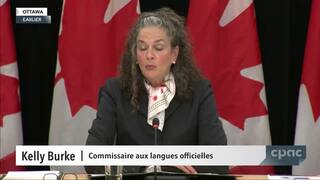 Kelly Burke, Commissioner of Official Languages, CPAC, Oct 9 |
Not in this budget. The savings lines carry no official languages assessment. |
| Expected: public service toward about 330,000 by 2028-29 | Treasury Board Minister Ali, Toronto Star, Sep 15; Hill Times, Sep 24 | Delivered. About 332,000 in August 2026, with operating cuts from 2027-28. |
| Expected: $60 billion in reductions in the budget | Government, FINA, Oct 5 | Partly. Chapter 6 restates Budget 2025's $60 billion with no progress table. |
| Expected: nearly 1,400 positions cut at ECCC and DFO | Ottawa Citizen, opinion, Nov 4 | Not in this budget. The budget names no department's cuts. |
Asks compiled by Stephen Taylor's AI Public Affairs Toolset, September 15 to November 5, 2026.
Groups that asked for deep cuts got a smaller public service and a forecast adjustment. Total spending still rises.
Net Assessment
The workforce reduction is real and nearly complete. The public service is about 36,000 employees smaller than at its peak (calculated). Budget 2026 adds modest operating cuts on top, worth $100 million a year from 2027-28.
The spending reduction is mostly a forecast. The savings Chapter 6 names fill a placeholder Budget 2025 had already booked and leave the deficit where it was. The larger reduction is the $12.4 billion a year that Annex 1 removes from projected spending without naming a department. If departments spend what Parliament has approved, the 2027-28 operating surplus that meets the anchor a year early would shrink or vanish.
About $5.9 billion of Budget 2025's productivity target is still unfound through 2030-31 (calculated). The business innovation and skills and youth reviews are the likeliest source. Budget 2026 also stops reporting the review by organisation, so tracking which programs lose money still means Budget 2025's tables and the 2027-28 Main Estimates.