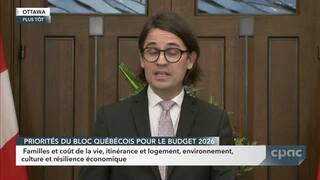
Extend the Reaching Home homelessness program beyond 2028
Bloc Québécois, Journal Le Soir, Nov 4; Jean-Denis Garon, CPAC, Nov 4
Reaching Home is renewed for 10 years from 2028-29.
Federal Budget 2026 for charities and non-profits: $11.2 billion to end homelessness, but no new money for community groups before 2027-28.
Homelessness plan
$11.2 billion over four years from 2027-28
Plus $17.8 billion in future years
Reaching Home and Veterans Homelessness Program renewal
$2.1 billion over three years from 2028-29
Renewed for 10 years, with real-time data reporting required
Gender-based violence agreements
$607.4 million over four years
Renewal announced in July 2026
Local Food Infrastructure Fund
$124 million over three years
From 2027-28
Clergy Residence Deduction flat amount
$27 million over four years from 2027-28
About 9,000 clergy, from the 2027 tax year
If you house or serve people experiencing homelessness, Budget 2026 gives you a 10-year federal horizon, with new reporting conditions attached. If you run anything else, you get short renewals that mostly start in 2027-28, and many end before the budget's five-year window does.
The budget gives no per-organization amounts. The table uses program totals from the chapter cost tables, in millions unless stated.
| Change | Amount | Who in this group | When |
|---|---|---|---|
| Gain: homelessness plan | $11,224 million to 2030-31, plus $17.8 billion in future years | Shelters, supportive housing operators, Reaching Home agencies | From 2027-28 |
| Gain: Build Canada Homes non-market capital | $13 billion over ten years (cash), $1,498 million booked to 2030-31 | Non-profit and community housing providers | From 2028-29 |
| Renewal: gender-based violence agreements | $607.4 million over four years | Women's shelters and survivor services funded by provinces | From 2027-28 |
| Renewal: 17 other program lines | $1,047 million over five years (calculated) | Food banks, arts, health, justice and equity-seeking groups | Mostly from 2027-28 |
| Ends inside the window | 10 of the 18 smaller lines stop before 2030-31 (calculated) | Food banks, Kids Help Phone, Brain Canada, Canada 160 partners | 2027-28 to 2029-30 |
| Tax: clergy flat deduction | $27 million over four years from 2027-28 | About 9,000 clergy who rent or own | 2027 tax year |
| Tax: excess corporate holdings regime ends | No cost stated | Private foundations | Tax years from January 1, 2027 |
| Re-announced or existing money | Gender-based violence renewal announced July 16, 2026; $6.9 million for Ready, Willing and Able from an existing fund | Disability employment and violence-prevention groups | Already public |
The gains are large but back-loaded. Spending on the 20 lines goes from nothing in 2026-27 to $2,988 million in 2027-28 and $4,545 million in 2028-29, then falls to $3,403 million by 2030-31 (calculated). The drop after 2028-29 reflects the $2 billion Health Infrastructure Fund top-up ending after two years and short renewals such as the Menstrual Equity Fund expiring (Budget 2026, Chapters 3 and 4).
The gender-based violence money is new in the cost table but old news to the sector. The government announced it on July 16, 2026 (Budget 2026, Chapter 5 cost table).
| Measure | Amount | When | What it means for you |
|---|---|---|---|
| Pillar 1: Putting Canada on a path to end homelessness | $11.2 billion over four years | From 2027-28; Reaching Home from 2028-29 | Reaching Home is renewed for 10 years, with real-time data as a funding condition |
| Addressing gender-based violence | $607.4 million over four years | From 2027-28 | Flows through provincial agreements, so your share depends on your province |
| Pillar 2: Expand non-market housing | $13 billion over ten years (cash) | From 2028-29 | Build Canada Homes capital for non-profit builders, at least 10% reserved for Indigenous housing |
| Celebrating Canada's 160th anniversary | $225 million net in 2027-28 | 2027-28 only | One-year money for festivals, the Trans Canada Trail and community spaces |
| Implementing Canada's Black Justice Strategy | $136.3 million over four years | From 2027-28 | Includes $41.1 million for reintegration work by Black-led organisations |
| Renewing the Local Food Infrastructure Fund | $124 million over three years | 2027-28 to 2029-30 | Food banks can buy food and equipment, then the money stops |
| Excess corporate holdings regime eliminated | No cost stated | Tax years from 2027 | Private foundations face one control rule in place of the 20 per cent share limit |
Reaching Home and the Veterans Homelessness Program get $2.1 billion over three years from 2028-29 and $4.4 billion in future years. Reaching Home will require "rigorous reporting, including real-time data" as a condition for continued funding, and details come early in the new year (Budget 2026, Chapter 3, s. 3.2). That is a new cost for agencies without live data systems.
The 2SLGBTQI+ Project Stream has no sector page, so its details sit here. Budget 2026 proposes $60 million over four years from 2027-28 and $15 million ongoing for community projects, public awareness, research and the 2SLGBTQI+ Secretariat. That adds to the $54.6 million over five years provided in Budget 2025 (Budget 2026, Chapter 4, s. 4.4).
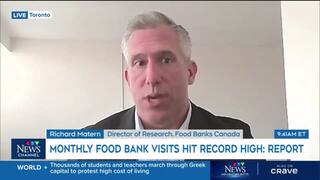
Asks compiled by Stephen Taylor's AI Public Affairs Toolset, September 15 to November 5, 2026.
Asks for housing money got part of what they sought, because housing is where the budget put its money. Asks about the sector's own capacity got no named funding. That covers tax clinics, benefit navigation, the 211 line and community service space.
Homelessness and housing providers gain the most. The new Integrated Supports Fund gets $1.8 billion over four years, and supportive and transitional housing gets $3.6 billion. Both run through Build Canada Homes, a Crown corporation (Budget 2026, Chapter 3, s. 3.2). Federal money covers capital only, and provinces and territories are expected to fund operations and wraparound services. If a province does not raise its operating funding, then new supportive units could open without the staff to run them. The government's own impacts report rates its housing and homelessness measures as strongly progressive, reaching mostly low-income people (Budget 2026, Annex 4).
Women's shelters and survivor services get $152 million a year for four years, the same amount each year (Budget 2026, Chapter 5 cost table). A flat line leaves no room for inflation or rising demand. National women's rights organisations get a promise that the government is "exploring how best to preserve" their expertise, with no money attached (Chapter 4, s. 4.4). The word "preserve" implies their capacity is at risk, and the budget does not say why.
Food banks get the Local Food Infrastructure Fund at $41 million a year from 2027-28 to 2029-30. That follows a $20 million top-up announced in the Spring Economic Update 2026. Nothing new arrives in 2026-27, the year Food Banks Canada said donations were falling behind demand.
Arts groups and festivals get a one-year spike. Canada 160 brings $300 million in 2027-28, of which $100 million comes from the existing Build Communities Strong Fund, and nothing after (Chapter 4, s. 4.1). The Canada Council for the Arts gets $20 million for live performance through 2029-30.
Health and youth charities get short renewals. Brain Canada gets $24 million in 2028-29 only, Kids Help Phone $7.5 million over three years, and the Emergency Treatment Fund $100 million over two years.
Equity-seeking organisations do better on duration. The 2SLGBTQI+ stream and the Women's Program get ongoing money, and Public Safety's share of the Black Justice Strategy funds reintegration by Black-led groups. The Community Resilience Fund, which backs groups working against radicalisation to violence, grows by $56 million over four years (Chapter 5, s. 5.2).
Private foundations that hold shares in a family company gain room. The excess corporate holdings regime caps a foundation and related persons at 20 per cent of a class of shares. It ends from the 2027 tax year, replaced by the existing rule that stops public foundations from controlling a corporation (Tax Measures: Supplementary Information, Excess Corporate Holdings Regime for Private Foundations).
International development groups get nothing new. Budget 2025 booked $2.7 billion over four years to return aid to pre-pandemic levels, and Budget 2026 does not revisit it (Budget 2025, Chapter 5). Public Safety and the RCMP get $23 million over four years to run the Criminal Code authorisation regime, which lets aid groups work in areas controlled by terrorist groups.
Tax and benefit navigators face more demand without new money. The CRA expects its outreach to bring an estimated 150,000 more Canadians onto benefits (Chapter 6, s. 6.1). This suggests more first-time filers will reach volunteer clinics, which the budget does not fund.
The Spring Economic Update 2026 promised to modernise the framework for the charitable sector in 2026-27, starting with a stakeholder consultation (Spring Economic Update 2026, Chapter 2). Budget 2026 does not mention that exercise. The two charity rule changes it makes, on foundation holdings and on ministerial designation of receipt rules, may be early pieces of it. The budget does not say so.
The budget is silent on several sector asks that were not scored above. United Way Centraide Canada asked for investment in community service infrastructure, a national volunteer strategy and use of 211 as a front door to government services. March of Dimes Canada asked for trained CRA staff with no time limits on calls. Prosper Canada asked for direct CRA channels for automatic filers and their community helpers. Tapestry Community Capital asked for tax changes to make community investment in housing easier. Cooperation Canada asked Ottawa to reverse cuts to global health programs.
The Bloc Québécois asked for $2 billion more for the Canada Rental Protection Fund's loan envelope. The budget lists the fund among Build Canada Homes' capital tools with no amount of its own (Chapter 3, Figure 3.4).
Non-profit corporations also get new oversight with no new support. The budget would amend the Canada Not-for-profit Corporations Act to widen access to beneficial ownership data and add powers to dissolve fraudulent corporations (Budget 2026, Annex 3). It also confirms it will proceed with the January 29, 2026 legislative proposals on reporting requirements for non-profit organizations.
| Date | What happens | What it means |
|---|---|---|
| Early 2027 | Details of the renewed Reaching Home, including real-time data reporting | Real-time reporting means data system and staff costs for community entities |
| 2027-28 (from April 1, 2027) | Most renewals start, including the Local Food Infrastructure Fund, Canada 160, gender-based violence agreements and the Black Justice Strategy | The budget gives no intake dates for calls for proposals |
| 2027 tax year | Clergy can claim a flat $1,000 a month; the excess corporate holdings regime ends for tax years beginning on or after January 1, 2027 | Foundation share holdings are tested against the control rule |
| Royal assent of the enacting bill | The CRA no longer needs Finance's sign-off to register a foreign charity as a qualified donee | Decisions on foreign partners can come faster |
| 90 days after royal assent | The Minister of National Revenue sets donation receipt content and prescribed donees | Receipt templates may need changes once the rules are published |
| Before the Spring Economic Update 2027 | Bilateral housing agreements realigned with provinces and territories | Provinces are expected to fund supportive housing operations |
| March 31, 2028 | Ready, Willing and Able funding ends | Any renewal is left to a later budget |
| 2028-29 | Reaching Home, the Veterans Homelessness Program, the Canada Housing Benefit and the Build Canada Homes top-up begin their new funding | The new funding comes through 10-year agreements |
| Not dated | Non-profit reporting requirements proposed on January 29, 2026, proceed | A bill will carry them, with no date given |