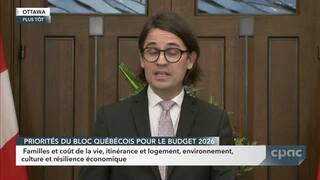
Double the federal grocery benefit
Bloc Québécois, La Nouvelle Union, Nov 3; Jean-Denis Garon, CPAC, Nov 4
A one-time 50% supplement for 2026-27.
Federal Budget 2026 for families: a one-time grocery benefit supplement of up to $679 for a couple with two children in early 2027, and no change to the CCB.
2027 Canada Groceries and Essentials Benefit Supplement, couple with two children
up to $679
One-time payment in early 2027; $4,055 million, all in 2026-27
Canada Child Benefit payments, 2026-27
$31.2 billion
Up 3.6% on indexation; no new Canada Child Benefit measure
Build Canada Workers Benefit maximum for families, 2027
$3,143
Up from $2,943; advance payments halved in 2027 and ended from 2028
Canada-wide child care transfers
$11.0 billion in 2027-28
Fall to $8.2 billion in 2028-29 as the $5.4 billion two-year top-up ends
Refundable Canada Caregiver Credit
$845 million over four years
From the 2027 tax year; up to $1,260 a year per caregiver
If your family income is low or modest, the budget adds one cheque in early 2027 and a bigger year-end workers benefit that now arrives only after you file. If you earn a middle income and no one in your household needs care, nothing in this budget changes your Canada Child Benefit or your tax rate.
| Change | Amount | Who in this group | When |
|---|---|---|---|
| Gain: 2027 Canada Groceries and Essentials Benefit Supplement | Up to $679 for a couple with two children; $4,055 million in total | Families receiving the benefit, based on 2025 income | Early 2027 (January 2027 payment month) |
| Gain: Build Canada Workers Benefit enhancement | Family maximum $3,143, up from $2,943; $2,060 million over five years | Low-wage couples and single parents | 2027 tax year |
| Loss: Advance Canada Workers Benefit phased out | -$3,082 million over five years | Workers who received advance payments | Halved from July 2027, ended from 2028 |
| Gain: Canada Caregiver Credit made refundable | Up to $1,260 a year, or $394 for an infirm child or spouse; $845 million over four years | Caregivers with little or no tax payable | 2027 tax year |
| Re-announced: fuel excise tax suspension extended | $2,870 million in 2026-27 | Families who drive | Full relief to January 31, 2027; half rates to March 31, 2027 |
| Re-announced: child care top-up | $5.4 billion over two years | Families using regulated child care | 2026-27 and 2027-28 only |
| Extended one year: home care and mental health agreements | $1.2 billion in 2027-28 | Families using home care or mental health services | To March 31, 2028 |
A negative figure means offsets or revenue exceed the gross cost, a net gain to the budgetary balance.
The budget states per-family values only for the grocery supplement, the workers benefit maximums and the caregiver credit. Its own benefits table puts total Canada Groceries and Essentials Benefit support for a couple with two children at up to $2,570 in 2026-27, including the supplement (Budget 2026, Budget in Brief). The fuel tax extension and the child care top-up were both announced before tabling. They are in this budget's tables, but they are not new money for your household this fall.
The workers benefit is the change to watch. The table nets $2,060 million in enhancements against $3,082 million saved by ending advance payments. A worker who relied on the July, October and January advances now waits for a lump sum after filing.
| Measure | Amount | When | What it means for you |
|---|---|---|---|
| Providing more help with groceries and everyday essentials | $4,665 million over five years, of which $4,055 million is the supplement | Early 2027 | One extra payment worth half your 2026-27 maximum |
| Strengthening support for workers earning low wages | -$1,022 million net over five years | 2027 tax year | Bigger benefit, paid only after you file |
| Securing the future of a Canada-wide early learning and child care system | $5,416 million over two years | 2026-27 and 2027-28 | Funds provinces to keep fees down for two years |
| Making the Canada Caregiver Credit refundable | $845 million over four years | 2027 tax year | Cash even if you owe no tax |
| Lowering costs for Canadians at the pump | $2,870 million in 2026-27 | To April 1, 2027 | Up to 10 cents a litre off gasoline |
| Connecting more Canadians to federal benefits | $334 million over five years | Outreach from 2027-28 | 150,000 more people expected to claim benefits |
| Sustaining the Canadian Dental Care Plan † | $470 million over five years | 2026-27 to 2030-31 | More money to 2028-29, less after |
† Earlier decision booked in Budget 2026, Annex 1 policy-actions table, not a new Budget 2026 measure.
A negative figure means offsets or revenue exceed the gross cost, a net gain to the budgetary balance.
The grocery supplement is calculated from your 2025 tax return. If you have not filed for 2025, you will not receive it. Parents with shared custody receive half of the child amount (Tax Measures: Supplementary Information, Personal Income Tax Measures). Child care is delivered by provinces and territories. The budget names only one new arrangement, a four-year Ontario extension worth nearly $12 billion from March 31, 2027, to March 31, 2031 (Budget 2026, Chapter 3, s. 3.1).
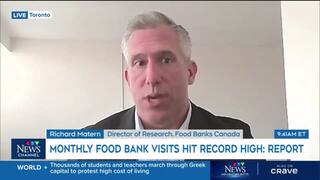
Asks compiled by Stephen Taylor's AI Public Affairs Toolset, September 15 to November 5, 2026.
Asks to put more money through programs families already use got part of what they sought, as one-time or time-limited payments. The Centre for Future Work and Antoine Genest-Grégoire argued for a bigger grocery benefit in place of the fuel tax cut. The budget did both. Asks for new programs, such as public IVF funding, got nothing. Leaks before tabling pointed to "new targeted measures" on affordability, and the grocery supplement and the Build Canada Workers Benefit are those measures.
Low-income families with children gain the most in 2026-27. Annex 4 rates the grocery supplement "strongly progressive" and lists lone parents among its main beneficiaries (Budget 2026, Annex 4). The same families carry most of the workers benefit change. The family maximum rises by $200 (calculated), but the advance payments disappear.
Families earning between $500 and $3,000 a year from work qualify for the workers benefit for the first time. The chapter counts 180,000 new recipients (Budget 2026, Chapter 3, s. 3.1).
Families caring for an infirm parent or adult relative gain up to $1,260 a year from 2027 if their income is too low to use the credit today. The credit for an infirm child under 18 is worth up to $394, with no income test on the child (Tax Measures: Supplementary Information, Canada Caregiver Credit).
Middle-income families see little change. The supplement phases out over the same income range as the regular benefit, and the budget adds no measure to the Canada Child Benefit.
Families outside Ontario using regulated child care know the top-up ends after 2027-28. The budget names no other extension like Ontario's. Annex 1 says only that bilateral agreements get a temporary 3% funding increase for four years beginning in 2027-28.
Families who do not drive gain nothing from the fuel tax extension, which Annex 4 rates as benefiting "all demographics."
First Nations and Inuit families get $6 billion over six years for Jordan's Principle and $575 million over five years to renew the Inuit Child First Initiative (Budget 2026, Chapter 4, s. 4.3). See the Indigenous economy and reconciliation page.
Farm and fishing families can pass property tax-free to nieces, nephews, grandnieces and grandnephews for transfers from January 1, 2027 (Tax Measures: Supplementary Information, Personal Income Tax Measures).
The budget is silent on the Canada Child Benefit itself. The only change is administrative. Families entitled to less than $50 a month will get one lump sum in July, up from a $20 threshold, for benefits paid after June 2027. Payments still rise with inflation, from $31.2 billion in 2026-27 to $35.7 billion in 2030-31 (Budget 2026, Annex 1, Table A1.10). That end point is $1.5 billion above the spring forecast (calculated), the effect of a higher inflation outlook. The Budget in Brief prints the same $15,040 maximum for a family of four that the Spring Economic Update printed.
After the top-up, the child care line in 2028-29 and 2029-30 matches the spring projection exactly. The 2030-31 figure is $0.7 billion higher (calculated), about the size of the $695 million the budget moves into that year from 2026-27. The budget calls the next step a federal-provincial effort to "strengthen the system" and books no money for it.
The National School Food Program appears only as an action already taken. Budget 2025 made it permanent at $216.6 million a year from 2029-30, and Budget 2026 adds nothing.
Several pre-budget asks for families are absent. The budget is silent on the NDP's public grocery stores, FP Canada's financial planning grant, the C.D. Howe Institute's simplified personal tax credit and the Bloc's call to remove GST from used goods.
| Date | What happens | What it means |
|---|---|---|
| Now to January 31, 2027 | Federal fuel excise tax suspended | No action needed. The saving is in the pump price. |
| January 2027 | 2027 grocery benefit supplement paid, based on 2025 income | Depends on a filed 2025 return |
| January 1, 2027 | Expanded farm and fishing property rollover takes effect | Applies to family transfers on or after this date |
| February 1 to March 31, 2027 | Fuel excise tax at half the standard rate | Full rates return April 1, 2027 |
| July 2027 | Advance workers benefit halved; new lump-sum thresholds for benefits paid after June 2027 | The in-year advance is smaller |
| 2027 tax year | Build Canada Workers Benefit, refundable caregiver credit, $1,200 flat adoption claim, May 15 filing date | Claimed on the 2027 return, filed in 2028 |
| March 31, 2028 | Home care and mental health agreements end | Any service changes would show up in provincial budgets |
| After 2027-28 | Child care top-up ends | The budget gives no date for a decision on what follows |
The budget gives no date for the Budget Implementation Act that would enact the tax changes. The January 2027 payment month for the supplement comes from the Notice of Ways and Means Motion tabled with the budget.