Cut permanent resident admissions in the levels plan
Conservative Party, Toronto Star, Oct 22
The target stays at 380,000 a year.
Federal Budget 2026 holds permanent resident admissions at 380,000 a year and lets up to 200,000 temporary residents become permanent by the end of 2027.
Permanent resident admissions target
380,000
a year, 2027 to 2029, unchanged from Budget 2025
New temporary resident arrivals target
370,000
a year, 2027 to 2029
Temporary residents who could become permanent
200,000
up to, by the end of 2027
Funding for the permanent residency transition
$302.3 million
over 4 years from 2027-28
The budget favours people who are already in Canada over people still abroad. Newcomers waiting on a permanent residence decision gain the most. Among the new measures, screening and enforcement get more money than direct support for newcomers.
| Change | Amount | Who in this group | When |
|---|---|---|---|
| One-time transition to permanent residence | $302.3 million over 4 years, $90.6 million in future years | Up to 200,000 temporary residents in Canada, including 100,000 workers via Express Entry or provincial nominee programs | By the end of 2027 |
| Permanent resident admissions held | 380,000 a year | Applicants in Canada and abroad | 2027 to 2029 |
| New temporary resident arrivals held | 370,000 a year | Students and workers abroad | 2027 to 2029 |
| Temporary Foreign Worker Program reform | $151.5 million over 5 years | Temporary foreign workers and their employers | From 2026-27 |
| Migrant Worker Support Program renewed | $82 million over 4 years | Temporary foreign workers facing abuse or exploitation | From 2027-28 |
| Interim Federal Health Program † | $404 million and $411 million | Refugees and asylum claimants | 2026-27 and 2027-28 only |
| Asylum processing | $98 million gross, $63 million net | Asylum claimants waiting for a hearing | From 2026-27 |
| Biometrics and eTA facial images | $90 million gross, $22 million in projected revenue | Visa applicants and visa-exempt travellers | From 2027-28 |
| Removals, anti-smuggling and Afghan resettlement enforcement | $73 million, $13 million and $14 million | People found inadmissible, Afghan arrivals | From 2027-28 |
† Earlier decision booked in Budget 2026, Annex 1 policy-actions table, not a new Budget 2026 measure.
The budget states no per-person amounts for any immigration measure. It gives program totals only.
The flat targets are well below recent intake. The 380,000 permanent resident target is 21% (calculated) below the 483,655 admissions of 2024. The 370,000 temporary arrivals target is 46% (calculated) below the 686,010 arrivals of 2024 (Budget 2026, Chapter 3, s. 3.4). The budget says the plan aims to avoid undue pressure on housing, health care and social services.
The new screening and enforcement lines add up to $168 million (calculated) over five years. That counts the removals, anti-smuggling, Afghan resettlement enforcement and biometrics lines. Outside the Interim Federal Health Program, the one support line aimed only at newcomers is the Migrant Worker Support Program renewal, at $82 million (Budget 2026, Chapter 3 and Chapter 5 cost tables).
The cost of the main immigration measure is shared with applicants. The table shows $511 million in gross costs and $287 million net, with projected revenues making up the difference (Budget 2026, Chapter 3 cost table). Budget 2025 described the same kind of offset as higher fee revenue (Budget 2025, Chapter 1).
| Measure | Amount | When | What it means for you |
|---|---|---|---|
| Immigration levels, permanent residency transition and TFWP reform | $287 million net over five years | 2026-27 | Flat targets and a one-time path to permanent residence for people already here. |
| Interim Federal Health Program † | $404 million and $411 million | 2026-27 and 2027-28 | Health coverage for refugees and claimants is secure to March 2028. |
| Asylum processing | $63 million | 2026-27 | Money for the Immigration and Refugee Board, IRCC and CBSA to reduce asylum inventories. |
| Migrant Worker Support Program | $82 million | 2027-28 | Non-profit help for temporary workers facing abuse. |
| Biometrics collection | $68 million | 2027-28 | Visa-exempt travellers will submit a facial image with an eTA. |
| Connecting more Canadians to federal benefits | $334 million | 2027-28 | Outreach to people disconnected from the tax and benefits system. The budget does not name newcomers here. |
| Form T1135 threshold | $17 million | Tax years ending after 2026 | No foreign property form below $200,000 in cost. |
† Earlier decision booked in Budget 2026, Annex 1 policy-actions table, not a new Budget 2026 measure.
Two benefit changes reach low-income newcomers who file taxes. The budget's impact assessment lists newcomers among those helped by the Build Canada Workers Benefit (Budget 2026, Annex 4). The one-time grocery benefit supplement in early 2027 is based on 2025 income. Both require a filed return, so newcomers who have not filed get nothing.
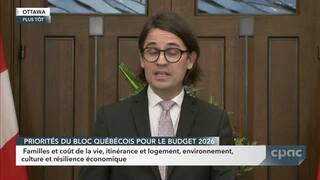
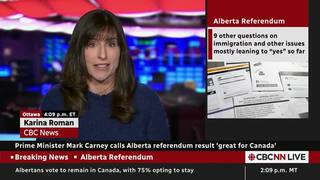
Asks compiled by Stephen Taylor's AI Public Affairs Toolset, September 15 to November 5, 2026.
The budget kept the levels Budget 2025 set and refused the Conservative call to cut permanent admissions. The increase the Prime Minister signalled shows up as a transition for people already counted in Canada's population. Quebec's money asks got nothing.
Temporary residents already in Canada gain the most. Up to 200,000 could become permanent residents by the end of 2027 (Budget 2026, Chapter 3, s. 3.4). Budget 2025 offered a one-time path for up to 33,000 work permit holders (Budget 2025, Chapter 1). The new pathway is about six times (calculated) that size.
Applicants abroad face flat targets. The budget does not say whether the 200,000 transitions count inside the 380,000 target. If they do, then fewer spaces remain for people applying from abroad in 2027. If they do not, then permanent admissions in 2027 will run well above the headline target.
Newcomers in Quebec rely on a province that asked Ottawa for $733 million in 2024 asylum costs and got nothing in this budget. The budget gives no sign of a separate deal.
Provinces and their nominees gain influence. Half of the transition, 100,000 workers, goes through Express Entry or provincial nominee programs, and the budget says this raises the provincial share of economic immigration (Budget 2026, Chapter 3, s. 3.4).
International students and new temporary workers face a smaller door. New student arrivals from January to August 2026 were 71% lower than in the same period of 2024 (Budget 2026, Chapter 3, s. 3.4). The 370,000 arrivals target matches the Budget 2025 plan for 2027 and 2028. The budget does not split it between students and workers.
Temporary foreign workers get a reformed program with stronger employer compliance. The impact assessment says the program's beneficiaries are predominantly men and predominantly low-income (Budget 2026, Annex 4).
Asylum claimants get faster processing money and two years of health coverage. New claims from January to August 2026 were 68% lower than in the same period of 2024. Budget 2025 had already scaled back the Interim Housing Assistance Program in line with fewer claimants, and announced a co-payment for some Interim Federal Health Program products (Budget 2025, Annex 3).
Economic immigrants had their Settlement Program eligibility limited in Budget 2025, and Budget 2026 does not restore it. Newcomers with foreign assets gain from the doubled $200,000 Form T1135 filing threshold. Newcomers targeted by fraud would benefit from the National Anti-Fraud Strategy, which caps consumer liability at $0 for unauthorised bank transactions absent gross negligence (Budget 2026, Chapter 5, s. 5.3).
The budget is silent on settlement services. Budget 2025 limited Settlement Program eligibility for economic immigrants as part of department savings that reach $614.2 million a year ongoing (Budget 2025, Annex 3, Table A3.14). Budget 2026 adds no settlement money and reverses none of those limits.
The budget is silent on interim housing for asylum claimants beyond what the Spring Economic Update 2026 booked. That update set aside $188 million a year for sheltering asylum claimants (Spring Economic Update 2026, Annex 1).
The budget gives no breakdown of the 380,000 target by economic, family and refugee class. It says details come with the 2026 Annual Report to Parliament on Immigration. It also adds no new money for foreign credential recognition and says only that the government has already acted (Budget 2026, Chapter 3, s. 3.4).
| Date | What happens | What it means |
|---|---|---|
| January 2027 | Grocery benefit supplement is paid, based on 2025 income | Depends on a filed 2025 tax return. |
| 2027 tax year | Form T1135 filing threshold doubles to $200,000 | Holders below the threshold no longer file the form in 2028. |
| 2027 | Levels plan targets take effect | The 2026 Annual Report to Parliament on Immigration will give the class breakdown. The budget gives no tabling date. |
| By the end of 2027 | Up to 200,000 temporary residents can transition | The budget gives no application dates. IRCC and provincial nominee programs run the transition. |
| July 2027 | Advance Canada Workers Benefit payments are cut in half | Recipients get smaller mid-year payments. |
| 2027-28 | Facial image requirement for eTA applicants is funded | The budget gives no start date. |
| March 31, 2028 | Last day of booked Interim Federal Health Program funding | Any extension would come in a later budget. |
| Not stated | Temporary Foreign Worker Program reforms and the Budget Implementation Act | The budget gives no dates. |