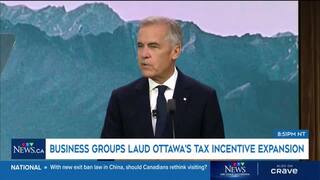
Cut the small business tax rate from 9% to 6%
CFIB, release, Oct 7; Dan Kelly, CFIB, CTV News Channel, Sep 16; CBC News Network, Nov 2
The rate is not mentioned.
Federal Budget 2026 gives small business and retail no rate cut, a $715 million startup capital gains break and instalment relief for 185,000 firms.
Canada Growth Incentive tax relief
$715 million
over four years from 2027-28
Small incorporated businesses no longer paying instalments
185,000
from the 2028 taxation year
Regional Tariff Response Initiative top-up
$1.5 billion
announced before the budget
Projected EI premium revenues from Budget 2026 measures
$2,188 million
over five years, 2026-27 to 2030-31
Productivity Mega Deduction cost
$36,055 million
over five years, permanent
The verdict is mixed and modest. Firms that buy equipment or raise equity gain the most. Main-street retailers and service businesses get filing relief that starts in 2028, competition reforms that depend on provinces, and no change to the small business rate.
| Item | 5-year amount ($M) | What it is |
|---|---|---|
| Productivity Mega Deduction* | 36,055 | Permanent immediate expensing for businesses of all sizes, booked as a capital investment |
| Supporting Canadian workers and businesses* | 11,324 | Tariff supports announced May 4 to October 21, 2026, re-announced |
| Groceries and essentials benefit supplement and Nutrition North | 4,665 | One-time 2027 payment to households, 4,055 of it in 2026-27 |
| Fuel excise tax relief extension | 2,870 | All in 2026-27, standard rates return April 1, 2027 |
| Instalments, preferred shares and Canada Growth Incentive | 1,201 (calculated) | Tax relief for owner-managed firms and founders |
| NRC IRAP Clean Technology renewal | 298 | Ends after 2029-30 |
| Wine Sector Support Program renewal | 177 | Three years from 2027-28 |
| Build Canada Workers Benefit | -1,022 | Net saving from ending advance payments to low-wage workers |
| Fines and penalties | -186 | Higher, inflation-indexed tax penalties and new monetary penalties |
| Modernising Canada Post | -102 | Net of savings, stamps rise to $2.00 from 2027 |
| Projected EI premium revenues for Budget 2026 measures | -2,188 | Premiums that recover the EI cost of tariff and skills measures |
| Expenditure review cuts at ISED, CRA, Finance and the regional agencies | not printed | Budget 2026 does not break savings down by organization |
* Includes funding classified as a capital investment.
A negative figure means offsets or revenue exceed the gross cost, a net gain to the budgetary balance.
The budget's biggest number for small firms is the $36,055 million Productivity Mega Deduction, which applies to every business that buys qualifying assets (Budget 2026: Masters of Our Destiny, Chapter 1, s. 1.1). The fiscal framework counts its forgone revenue as a capital investment. That keeps it out of the day-to-day operating balance the government uses as its anchor (Budget 2026, Annex 1, Table A1.6). The second-biggest line, $11,324 million for tariff supports, repeats decisions announced from May to October and gives no small-business share. New money designed for small firms is the $1,201 million in tax changes (calculated). That is smaller than the $2,188 million in EI premium revenue the same budget projects (calculated comparison). The household measures that move retail sales are short. The groceries supplement puts 87% of its five-year cost into 2026-27 (calculated), and the fuel tax relief is entirely in that year. No expenditure review cut is attributed to the sector's departments, because Budget 2026 publishes no organization-level savings.
| Measure | Net 5-year cost ($M) | Start | What it means for the sector |
|---|---|---|---|
| Kickstarting Canada's Investment Supercycle with the Productivity Mega Deduction* | 36,055 | 2026-27 | Full write-off of most equipment, from restaurant kitchens to delivery vehicles |
| Supporting Canadian workers and businesses* | 11,324 | 2026-27 | Holds the RTRI top-up and BDC stream, previously announced |
| Providing more help with groceries and everyday essentials | 4,665 | Early 2027 | One-time household payment spent largely at grocers |
| Lowering costs for Canadians at the pump | 2,870 | 2026-27 | Fuel relief for delivery and trades firms until January 2027 |
| Strengthening support for workers earning low wages | -1,022 | 2027 tax year | Higher benefit for retail staff, advance payments end |
| Making it easier for Canadians to manage their taxes | 821 | 2027 and 2028 tax years | $7,500 instalment threshold and May 15 due date |
| Backing Canada's next generation of entrepreneurs | 715 | 2027-28 | $15 million capital gains exemption and longer rollover |
| NRC IRAP Clean Technology renewal | 298 | 2027-28 | Clean-tech help for small firms, ends after 2029-30 |
| Making it easier to do business | 236 | Budget Day | CCPC dividends leave the taxable preferred share regime |
| Modernising Canada Post | -102 | 2027 | $2.00 stamp, about $9 a year per small business |
* Includes funding classified as a capital investment.
A negative figure means offsets or revenue exceed the gross cost, a net gain to the budgetary balance.
The Regional Tariff Response Initiative. The budget confirms an additional $1.5 billion for the initiative, delivered by the regional development agencies as cash and working capital for small and medium-sized firms (Budget 2026: Masters of Our Destiny, Chapter 2, s. 2.3). It has supported nearly $1.2 billion in investments for about 1,200 businesses since fall 2025. Total investment has reached nearly $3.5 billion. Budget 2025 had set it at up to $1 billion over three years (Budget 2025, Chapter 2). The budget also lets the agencies tailor support to smaller businesses and organisations, with no cost line and no eligibility details (Budget 2026: Masters of Our Destiny, Chapter 2, s. 2.3).
BDC Pivot to Grow. A new $500 million financing stream is a loan program. BDC's minimum revenue requirement for its tariff-related programs drops to $1 million (Budget 2026: Masters of Our Destiny, Chapter 2, s. 2.3). The program had lent about $250 million through nearly 200 loans by budget day, an average of about $1.3 million per loan (calculated). That suggests it has served firms well above the corner-store scale.
Filing and instalment relief. The quarterly instalment threshold rises from $3,000 to $7,500 and is indexed, for taxation years from 2028. About 185,000 small incorporated businesses would stop paying instalments. Self-employed owners could make a single payment of two thirds of their tax by December 31 (Budget 2026: Masters of Our Destiny, Chapter 6, s. 6.1). May 15 becomes the single filing and payment date from the 2027 taxation year.
Competition rules for retail. Ottawa will consult on supplier practices that stop retailers from discounting. It will also work with provinces to end property controls that block new grocery stores, building on Manitoba's model (Budget 2026: Masters of Our Destiny, Chapter 1, s. 1.5). Neither has a cost line or a date.

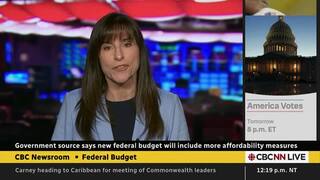
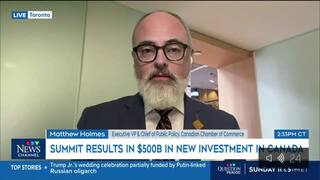
Asks compiled by Stephen Taylor's AI Public Affairs Toolset, September 15 to November 5, 2026.
CFIB's rate, payroll and threshold asks all went unanswered. A National Post report on October 23 said the budget would cut small business costs, possibly through the rate and EI premiums, and neither appeared. The Chamber's investment ask and the reported plan for targeted breaks for entrepreneurs both arrived, as the Productivity Mega Deduction and the Canada Growth Incentive. Finance Minister Champagne's November 2 preview of help for small and medium-sized firms turned out to mean filing simplification.
Capital-heavy small firms gain the most. The budget's own examples of eligible assets include restaurant equipment, tourism assets, construction machinery and transportation vehicles (Budget 2026: Masters of Our Destiny, Chapter 1, s. 1.1). A retailer whose costs are mostly rent, wages and inventory gets little from immediate expensing, because none of those are depreciable assets.
Founders of high-growth companies gain from the Canada Growth Incentive. It excludes food and accommodation, professional practices, real estate, and franchised or licensed businesses (Tax Measures: Supplementary Information, Personal Income Tax Measures). Most franchised retail and restaurant owners are therefore outside it.
Seasonal and self-employed owners gain cash flow from the single December 31 instalment, but only from 2028. Canadian-controlled private corporations that use preferred shares gain right away, since the exemption applies to dividends paid after Budget Day.
Grocery entrants and discount retailers gain if provinces drop restrictive property controls and Ottawa acts on suppliers that block discounting. Incumbent grocers and their suppliers face that scrutiny. Every employer, small or large, pays the premiums that recover the EI cost of the tariff response. Small firms with less than $1 million in revenue remain outside BDC's direct tariff programs.
The government is helping small business through investment incentives, paperwork relief and competition policy. It is not using rate cuts. Budget 2025 offered the Productivity Super-Deduction, and Budget 2026 makes the write-off permanent and wider. Delivery is consolidating in Crown corporations. The Canada Small Business Financing Program moves to BDC, which Budget 2025 had already proposed (Budget 2025, Annex 5). That makes this year's Annex 3 provision a re-announcement. BDC and Export Development Canada are to merge into one development bank, detailed on the Crown corporations page. The regional agencies get more discretion over smaller firms. Competition has become the main retail file, with property controls, discounting restrictions and non-compete agreements all moved to talks with provinces.
The tariff money depends on programs that were sized before the budget and are booked in one aggregate row. Firms cannot tell from the budget how much of the $11,324 million is left for small businesses. The BDC-EDC merger is a transition with a new board and consultations. The budget says existing products will be maintained, but it sets no timeline. A review of business innovation programs is under way, with results to come in future publications (Budget 2026: Masters of Our Destiny, Chapter 6, s. 6.3). That review could reach programs small firms use. IRAP's clean technology renewal shows a dash in 2030-31, meaning an extension will be considered later.
Fuel relief ends in stages. Rates return to 50% of pre-suspension levels in February 2027 and to full rates on April 1, 2027. Tax penalty amounts rise with inflation and repeat non-compliance draws new penalties (Budget 2026: Masters of Our Destiny, Chapter 6, s. 6.3). The CRA also gets $116.5 million to pursue non-filers and widen other compliance checks. The budget will also amend penalties under the Weights and Measures Act, which matters for any retailer that sells by weight. The economic base is soft, with average private-sector forecasts of 1.0% real growth in 2026 (Budget 2026, Annex 1, Table A1.2).
The budget is silent on a digital GST/HST refund for international visitors, which the Alliance for Visitor's Tax Refund asked for at FINA on October 6. It is silent on the Frontier Duty Free Association's requests on tariff relief access and tobacco excise, made at the same hearing. CFIB's calls to double the Canada Pension Plan basic exemption to $7,000 and create a self-employed deduction of up to $20,000 are not addressed. CFIB also wanted counter-tariff revenue returned directly to affected firms. The budget reports net revenue from U.S. countermeasures (Budget 2026, Annex 1, Chart A1.3) and directs support through programs. The Bloc Québécois asked to end GST on used goods, and the NDP asked for public grocery stores. Neither appears. The budget's grocery response is the property-control and discounting work with provinces. It also makes no change to the lifetime capital gains exemption for owners selling an established business.
Federal Budget 2026 and Crown corporations: a $25 billion Canada Strong Fund, a merged BDC and EDC, and $59.1 billion in Crown lending in 2026-27.
Federal Budget 2026 finds $2,053 million in new savings that only fill a Budget 2025 placeholder, while Annex 1 trims forecast spending $12.4 billion a year.
Federal Budget 2026 fiscal deep dive: the deficit path, the operating anchor, debt charges and a $149.5 billion cash requirement in 2026-27.
Federal Budget 2026 highlights ranked by money and by news value, led by the $36,055 million Productivity Mega Deduction and a merged BDC and EDC.