Accelerate major projects and cut regulatory burden
KPMG survey, release, Oct 15, Financial Post, Nov 3
The Major Projects Office gets $121 million to 2027-28, and a new projects entity is funded. Bill C-39 was already before Parliament.
Follow Stephen Taylor’s newsletter for federal budget intelligence, policy signals, and stakeholder-ready analysis.
Budget 2026 brief for pipeline companies: Pacific Link is listed and 15% of Trans Mountain is offered, with $1 million booked for both.
Pacific Link pipeline and Pathways Project
No federal cost line
Lists a 1,250 km, one million barrel a day crude line from Bruderheim to a deep-water port near Delta as a project of national interest, largely along Trans Mountain rights of way (Chapter 2, s. 2.1).
Indigenous ownership stake in Trans Mountain Corporation (and Pacific Link)
$1M over 5 years
Offers 128 Indigenous groups a collective 15 per cent of Trans Mountain, with Finance implementation booked at $1 million, and commits to a similar offer on Pacific Link (Chapter 2, s. 2.1, and Annex 1, Table A1.19).
Interest deductibility limits
$555M over 5 years
Widens the excessive interest rule exception for regulated energy utility businesses to borrowing within affiliated groups and to prices set by Crown corporations or government-operated markets, back to 2023 (Chapter 6, Additional investments).
Building Canada Strong Act (Bill C-39)
No cost line
Makes the Canada Energy Regulator the lead for pipeline reviews, targets one federal decision within one year and creates Corridors of National Interest (Chapter 6, s. 6.2).
Kickstarting Canada's Investment Supercycle with the Productivity Mega Deduction
$36,055M over 5 years
Permanent immediate expensing that names regulated natural gas distribution pipelines among its few exclusions (Chapter 1, s. 1.1).
“Pacific Link would carry one million barrels a day along a 1,250 km route that largely follows Trans Mountain rights of way. The budget credits it with up to 140,000 jobs, so a firm federal decision date is the next test.”
“The offer of 15 per cent of Trans Mountain to 128 Indigenous groups shows how equity can move projects. The fifth loan guarantee under the $10 billion program is the next step.”
“Speeding up reviews needs people as well as law, and the $121 million for the Major Projects Office runs out after 2027-28.”
The budget treats pipelines as an approvals and ownership file. Ottawa acts as regulator, seller of Trans Mountain equity and guarantor for Indigenous partners. It puts almost no federal capital into new lines. The one tax change aimed at regulated energy businesses, the interest deductibility fix, helps gas utilities and some pipeline owners more directly than the headline Mega Deduction.
These five measures matter most to pipeline owners.
| Measure | Five-year net ($M) | 2026-27 ($M) | Starts | Home page |
|---|---|---|---|---|
| Pacific Link pipeline and Pathways Project | No cost line | No cost line | Listed October 1, 2026 | Oil and gas |
| Implementing Indigenous Economic Participation in Trans Mountain † | 1 | 0 | Offer made September 2026 | Pipelines |
| Interest deductibility limits | 555 | 235 | Taxation years from October 1, 2023 | Tax measures |
| Building Canada Strong Act (Bill C-39) | No cost line | No cost line | Introduced September 21, 2026 | Oil and gas |
| Productivity Mega Deduction | 36,055 | 2,015 | Announced September 15, 2026 | Tax measures |
† Earlier decision booked in Budget 2026, Annex 1 policy-actions table, not a new Budget 2026 measure.
Pacific Link. The route runs from Bruderheim, Alberta, to a port near Delta, British Columbia. It will in large part follow Trans Mountain rights of way (Budget 2026: Masters of Our Destiny, Chapter 2, s. 2.1). Sharing a corridor suggests the operator and owners of Trans Mountain hold a practical advantage in building it. The budget names no proponent.
Trans Mountain equity. The 15 per cent offer has no price in the budget. Finance books less than $0.5 million in each of 2026-27 and 2027-28 and $1 million in 2028-29 (Budget 2026: Masters of Our Destiny, Annex 1, Table A1.19). No sale proceeds appear in the fiscal plan.
Interest deductibility limits. Of the $555 million, $235 million falls in 2026-27, or 42.3 per cent (calculated). The change reaches back to taxation years starting October 1, 2023 (Budget 2026: Masters of Our Destiny, Chapter 6, Additional investments). If CER-approved tolls count as government-approved prices, regulated pipelines fall inside the widened definition.
Bill C-39. The Canada Energy Regulator becomes the lead for pipeline reviews, and a Crown Consultation Hub runs one consultation per project (Budget 2026: Masters of Our Destiny, Chapter 6, s. 6.2). The bill was already before Parliament, so this is restated policy.
Productivity Mega Deduction. Gas distribution networks are out by name. The budget gives no list for transmission pipelines (Budget 2026: Masters of Our Destiny, Chapter 1, s. 1.1).
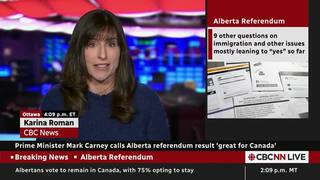

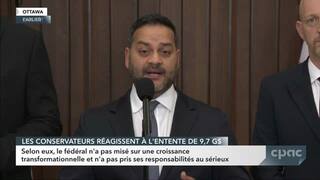

No pipeline company or pipeline association appears in the pre-budget record. The asks that touch pipelines came from a business survey, reporters, critics and the AFN. The speed-up was delivered through new Major Projects Office money and a bill already tabled, which gives the industry a win to claim on process. Money, a timeline for Pacific Link and Buy Canadian rules for energy projects remain open.
Asks compiled by Stephen Taylor's AI Public Affairs Toolset, September 15 to November 5, 2026.
The biggest risk is that Pacific Link stays a listing. The budget gives a route, capacity of one million barrels a day and up to 140,000 jobs. It leaves the final route to talks with Indigenous communities, landowners and communities in British Columbia and Alberta (Budget 2026: Masters of Our Destiny, Chapter 2, s. 2.1). It names no proponent, sets no in-service date and books no federal financing. The office coordinating it gets $43 million in 2026-27 and $78 million in 2027-28, then nothing in the plan (Budget 2026: Masters of Our Destiny, Chapter 2, Additional investments).
The tax treatment of transmission pipelines is a second risk. The Mega Deduction excludes regulated natural gas distribution pipelines. The budget says its exclusions align with U.S. bonus depreciation, which leaves out rate-regulated utility property (Budget 2026: Masters of Our Destiny, Chapter 1, s. 1.1). If Finance reads "assets subject to regulated rates" broadly, toll-regulated oil and gas transmission lines could fall outside the measure. That would leave pipelines with standard capital cost allowance while competitors for the same capital expense their assets in year one.
The approvals reform is still a bill. The one-year decision target, the single Crown consultation and Corridors of National Interest depend on Bill C-39 passing (Budget 2026: Masters of Our Destiny, Chapter 6, s. 6.2). The budget says the timelines do not change section 35 rights or the duty to consult. Consultation and litigation risk remain with the proponent.
Carbon costs are open. The government will update the industrial carbon pricing benchmark with no date or price path (Budget 2026: Masters of Our Destiny, Chapter 1, s. 1.4). Compressor and pump stations covered by carbon pricing face an unknown cost per tonne.
West Coast marine rules will tighten as traffic grows. The budget puts $740 million over four years from 2027-28 into coastal marine safety (Budget 2026: Masters of Our Destiny, Chapter 4, s. 4.1). That sits inside a $1,186 million net oceans package tied to faster major projects. This suggests more federal oversight of tanker traffic at marine terminals.
Indigenous equity tools widen. The fifth guarantee under the $10 billion Indigenous Loan Guarantee Program is for an oil and gas project. It would give "multiple communities a direct stake in major energy infrastructure" (Budget 2026: Masters of Our Destiny, Chapter 4, s. 4.3). The program moves into the Canada Infrastructure Bank, which shifts to the Minister of Finance with a mandate focused on loans and loan guarantees (Budget 2026: Masters of Our Destiny, Chapter 6, s. 6.3). The First Nations Finance Authority would also be allowed to lend to Indigenous-owned special purpose vehicles (Budget 2026: Masters of Our Destiny, Annex 3).
The Canada Strong Fund adds a co-investor. It gets an initial $25 billion over three years. Federal support through the Major Projects Office or a Crown lender "would normally include an opportunity to make a minority co-investment" (Budget 2026: Masters of Our Destiny, Chapter 2, s. 2.1). Legislation to make it a standalone Crown corporation is promised "in the coming months." A pipeline on the national-interest list fits the fund's first stream.
The interest deductibility change may lower financing costs. Borrowing by one group member for a regulated energy utility business run by an affiliate would qualify for the exception. So would borrowing for a partnership in which the group holds at least 40 per cent (Tax Measures: Supplementary Information, Interest Deductibility Limits). The change applies back to taxation years beginning on or after October 1, 2023. This suggests groups that finance regulated energy businesses through a holding company gain the most.
Export capacity is growing around existing lines. LNG Canada Phase 2 doubles capacity to 28 million tonnes a year (Budget 2026: Masters of Our Destiny, Chapter 2, s. 2.1). The Economic and Fiscal Overview notes Enbridge's Mainline optimisation work would add 150,000 barrels a day toward the U.S. Midwest and Gulf Coast. Canada and the EU will assess more LNG exports to Europe (Budget 2026: Masters of Our Destiny, Chapter 2, s. 2.2).
The government wants pipelines built and owned by others, with Indigenous partners holding real stakes. It is selling part of Trans Mountain and commits to "a similar opportunity in relation to the Pacific Link project" (Budget 2026: Masters of Our Destiny, Chapter 2, s. 2.1). This suggests Ottawa wants to recover capital from Trans Mountain and avoid owning a second line.
Market access is the economic case. The budget says Pacific Link would help "reduce the price discount on Canadian oil relative to U.S. oil" and open Asian markets. It credits the line with $70 billion to $81 billion in pipeline and upstream investment (Budget 2026: Masters of Our Destiny, Economic and Fiscal Overview). Pairing it with Pathways carbon capture lets the government present the line within its net zero by 2050 frame.
Speed is the political case. "One project, one decision, one year" answers a business complaint that the KPMG survey put first among budget wishes. The government can point to faster decisions without spending, which suits a plan with a $62.3 billion deficit in 2026-27 (Budget 2026: Masters of Our Destiny, Annex 1, Table A1.8).
| Date | What happens | What it means for this client |
|---|---|---|
| October 1, 2023 | Interest deductibility exceptions apply to taxation years beginning on or after this date | Relief reaches back to 2023 taxation years for qualifying regulated businesses |
| September 15, 2026 | Productivity Mega Deduction announced and legislative proposals released | Draft rules show which pipeline assets are excluded |
| September 21, 2026 | Bill C-39 introduced | Canada Energy Regulator to lead pipeline reviews once passed |
| October 1, 2026 | Pacific Link listed as a project of national interest | The line enters the streamlined federal approval path |
| November 5, 2026 | Notice of Ways and Means Motion tabled with draft interest deductibility text | The affiliated-group and price-test changes are in draft law |
| 2027-28 | Coastal marine safety funding of $740 million begins and Major Projects Office resources end | Marine oversight rises as federal project support thins |
| 2028-29 | Finance books $1 million to implement Indigenous participation in Trans Mountain | The plan expects the sale work to peak in this year |
For government. Pacific Link would carry one million barrels a day along a 1,250 km route that largely follows Trans Mountain rights of way. The budget credits it with up to 140,000 jobs, so a firm federal decision date is the next test. The supporting figure is the $70 billion to $81 billion in pipeline and upstream investment the budget attaches to the line.
For Indigenous partners and members. The offer of 15 per cent of Trans Mountain to 128 Indigenous groups shows how equity can move projects. The fifth loan guarantee under the $10 billion program is the next step. The supporting figure is the minimum 10 per cent ownership offer on Pacific Link.
For media. Speeding up reviews needs people as well as law, and the $121 million for the Major Projects Office runs out after 2027-28. The supporting figures are the $43 million and $78 million booked in the first two years and nothing after.
The Conservatives will say the budget lists Pacific Link without money, proponent or date. A CBC reporter expected specifics, dollars and timelines for major projects. The budget gives a route and capacity, which supports the opposition line.
The Bloc Québécois, the Greens and groups like the RNAO will frame Pacific Link and the Mega Deduction as fossil fuel expansion. They will cite the RNAO ask for cumulative health and climate assessment against Bill C-39's one-year cap. British Columbia coastal First Nations and environmental groups are likely to focus on tanker traffic, where the budget's answer is $740 million for coastal marine safety.
Indigenous leaders will weigh the Trans Mountain offer against the AFN's call for tables on a First Nations sovereign wealth fund. The 15 per cent figure and the missing price will draw questions about whether equity comes with enough financing.
The Parliamentary Budget Officer and fiscal reporters may ask why no Trans Mountain sale proceeds appear in the plan. They may also ask how a pipeline with no federal capital fits a budget that books $403.9 billion of capital investment over six years (Budget 2026: Masters of Our Destiny, Economic and Fiscal Overview).
Bill C-39's progress through the House and Senate decides when the one-year clock applies. Canada Energy Regulator filings and any Corridors of National Interest regional assessments will show whether Pacific Link moves from listing to application.
The Trans Mountain sale terms, and whether a price appears in a later fiscal update, are the second marker. The fifth Indigenous loan guarantee announcement and the Canada Strong Fund legislation will show how much Crown financing is available for pipeline equity.
Draft legislation for the Mega Deduction and the interest deductibility text in the Notice of Ways and Means Motion will settle the tax questions. The Main Estimates will show whether the Major Projects Office gets money beyond 2027-28.
Commodity and rate assumptions drive shipper demand and financing costs. The budget assumes WTI of US$79 in 2027 and a 10-year bond rate of 3.8 per cent that year (Budget 2026: Masters of Our Destiny, Annex 1, Table A1.2). Annex 1 notes the Bank of Canada raised its policy rate by 25 basis points in October. The spring economic and fiscal update will restate both.